






Ecomuseum of the Olive tree- Volx, Provence.2017/6/3
Ecomuseum of the Olive tree- Volx, Provence.
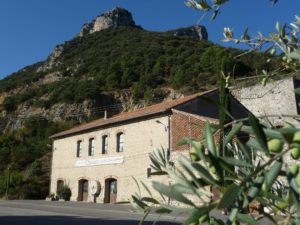
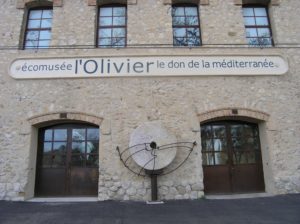
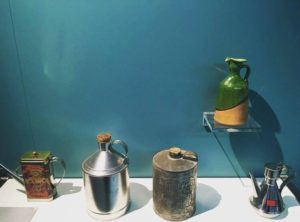
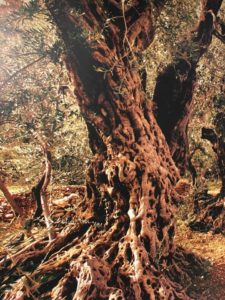
This eco-museum 10km from Manosque in Volx honours Olive tree, symbol of the Mediterranean Sea.
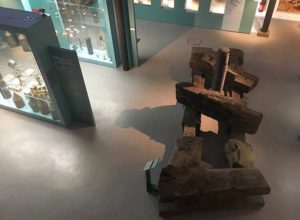
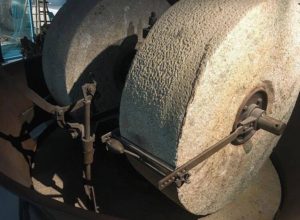
In the former building of Lime kilns, this ecomuseum tells the story of the Men of the olive tree.
They are born in Provence, Italy, Lebanon, Greece, Spain, Croatia, Jordan…Their history is similar, yet different every time.
Gift of sky or earth, the Olive is the tree that nourishes men and lights their houses.
The olive tree unites the three religions of the Book, for it is “neither Eastern nor Western”. It is the gift of the Mediterranean.
This museum is a place for history and recollection. It tells the story of the olive tree which, along with the grapevine and wheat, is a symbol of Mediterranean civilisation. It is an important conquest for the economy and culture of the people who ring the mediterranean.
Talking about the olive tree also means remembering and paying homage to the men and women of the olive tree who know how to approach it, look at it and help it to live.
The extension of the olive tree is linked to the establishment of the Mediterranean climate. In the Mediterranean world, the domesticated olive tree spread from the East from c.4000 BC. The oil was a precious substance produced in Palestine and transported by caravan to Mesopotamia, to Egypt of the Pharaohs, particularly to supply perfumers, doctors and embalmers.
But it was above all in Greece, where cultivation of the olive tree was extended, that olive oil established itself as a foodstuff and source of light, and where the olive tree was celebrated as the most noble of plants. Greek and Phoenician merchants took the oil to the entire Mediterranean world. In Provence, Phocaean traders (from Phocea in Turkey, which was Greek at the time) introduced the olive when they founded Massilia (Marseille) in 600BC.
The eternal tree.
It is said that when the Persians burned the Acropolis, the olive trees sacred to Athena began to grow back as early as the following day. It is said that the tree of Roquebrune-Cap-Martin in the Maritime Alps, its trunk measuring 65 feet around its circumference, is more tahn one thousand years old. It is also said that the olive trees of the Mount of Olives, in Jerusalem, were contemporaneous with Christ.
And that there is, on the Greek island of Egine, an olive tree so old that it was alive during the reign of Constantine, the first Christian emperor(306 to 337 A.D). It is even said that the olive trees of Bchaale, in the north of Lebanon, are likely to be more than 6000 years old. It is said that the olive tree is eternal. Science remains cautious, because dendrochronology, the scientic method that uses cross sections of trunks for dating trees, isn’t applicable to the olive tree, because its rings, or growth-rings, are often split and undecipherable.
However, there is reason to believe that the olive is almost immortal because it really never dies of old age.
When it is not tented, or even when it is assailed by a frost or fire, shoots of new growth emerge again from its stump and a new tree replaces it, its genetic twin.
The life of a tree.
At ten to twelve years, the olive tree begins to bear fruit. If it receives intensive care, the first olives may appear by the end of five years, but it only becomes truly productive closer to thirty-five years. As long as the light can penetrate, as long as it is aerated, and as long as it is maintained with a good leaf/root balance, the olive remains young. So, when the grower lends it a hand, the olive tree will continue to bear fruit time and time again for thousands of years.
Ecomusée l’Olivier
https://www.ecomusee-olivier.com/
RD13, Ancienne Route de Forcalquier, 04130 Volx
04 86 68 53 15
open Tuesday to Saturday, 10am-6pm.
Silvacane Abbey- La Roque d’Anthéron. -A Cistercian example-2017/5/20
Silvacane Abbey- La Roque d’Anthéron.
-A Cistercian example-
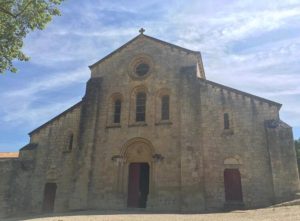
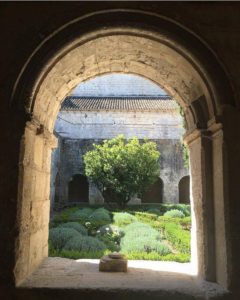
With its “sister houses”, Le Thoronet and Sénanque, Silvacane is one of the three Cistercian abbeys in provence. It was in about 1144 that monks from Morimond setled on the banks of the Durance, on a desolate and marshy site that gave its name to the monastery-Silva cana, the forest of reeds. Guillaume de la Roque and Raymond des Baux provided the first land, then the seigniorial families of the district made further gifts of land. In 1175, Bertrand des Baux undertook the construction of the church in which he was to be buried. The 12th and 13th centuries marked the spiritual and economic blossoming of the abbey, which, in 1188, in turn founded Valsainte abbey. Its decline began in the late 13th century. Foloowing the conflict, still remembered, with Montmajour abbey, Silvacane was not spared by the civil disorder, natural disasters, the Hundred Years War and the general collapse of law and order. Annexed to the cathedral chapter of Aix-en-Provence in about 1443, its status was to be reduced to that of a dependency. It became a national asset during the Revolution and was converted into an agricultural holding. The church was purchased by the state in 1845 and restored by Revoil, then Formigé, architects of historic buildings. The whole estate was acquired by the State in 1945. Recent excavations have revealed the site of its subsidiary buildings.
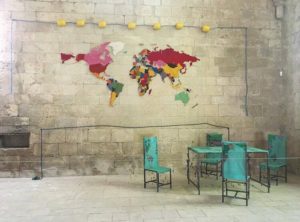
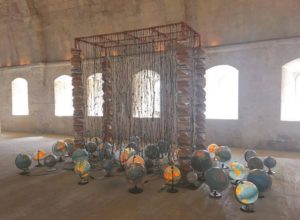
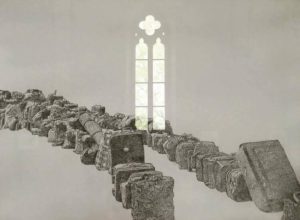
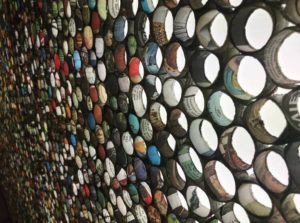
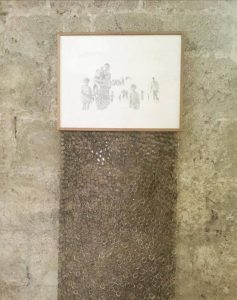
The Silvacane abbey is hosting from 15th of April until 28th of May the contemporary art exhibition, “Le Monde”, of the visual artist Jean-Baptiste Audat,
On May 20th the National Dance Ballet of Marseille will present two of its creations at the Abbey.
The town of La Roque d’Antheron is also the scene of the renowned International piano festival from July 21st to August 19th.
http://www.festival-piano.com/fr/accueil/bienvenue.html
Salagon, Musée et Jardins- Mane, Alpes de Haute-Provence2017/5/15
Salagon, Musée et Jardins- Mane, Alpes de Haute-Provence
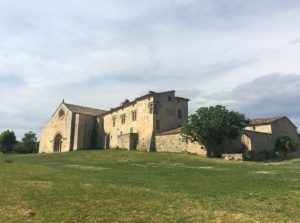
Salagon is a unique site located in Mane, near Forcalquier, in the middle of Haute-Provence and the Luberon. Made up of a priory which is a listed historical monument and 6 ha of gardens, Salagon is steeped in history, culture and know-how. The museum is managed by the Conseil départemental des Alpes de Haute-Provence.
Salagon is an ethnological Museum which introduces the general public to the links that Man has woven locally with his environment. Its collection includes objects which tell the story of rural life in Haute-Provence. Salagon is listed as an Ethnopôle (ethnocluster) for the quality of its scientific research on the “know-how of nature”.
The 1700 species of plants grown in the five themed gardens of Salagon illustrate the relationships between society in Haute-Provence and its plant environment. Listed a Remarkable Garden, Salagon is an open-air manual which is an aesthetic creation, a teaching tool and a place of conservation for plants and know-how.
The popular and village plants garden
This small garden brings together the basic plants used by society in Haute-Provence, the flora of towns and villages, domestic gardens, roadsides, cultivated fields and fallow pasture. These are the plants people see on the journeys they make day to day: between the stable and the pasture, and between the house and the school or wood.
This is where people gathered first-aid remedies and also field salad leaves and other wild vegetables. This is where children built new playthings each day. This is where older people passed on their knowledge, by both showing and telling.
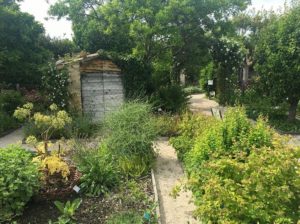
The medieval garden
This garden is inspired by illuminated manuscripts, treatises on agriculture and medieval pharmacopoeia. It tells the story of plants in Western Europe before the discovery of the New World.
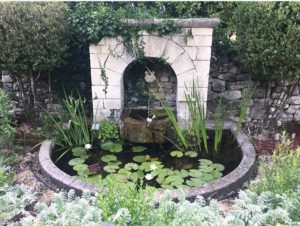
It is laid out in three major zones: the kitchen garden (plants grown for food), medicinal squares, the floral garden and the secret garden near the fountain.
A range of cereals (rye and wheat, spelt and millets) are used to make bread, groats and porridge. Pulses are rich in protein and are an important source of nutrition.
In the medicinal squares, five beds relate to the five medieval pathology and pharmacopoeia groups from the old classifications.
After the rose pergola, flowers used to decorate the altar are grouped together in the flower garden, together with plants used in weaving and dyeing. The other side of the fountain, in the secret garden, are the highly poisonous plants, from the days when medicine and magic were inextricably linked.
The modern garden is a journey through modern flora. It helps visitors understand the origins and history of vegetables, fruit and flowers, during the period when society moved slowly from a hunter-gatherer system to agriculture. It explains the role of plants in the progress made by societies, around the basic pairings of cereals and civilisations.
Each species in the garden links a continent and civilisations to the plants that helped it grow and develop:
Europe and the Mediterranean basin (wheat, vines, olive trees, etc.)
Sub-Saharan Africa (sorghum and millets, papyrus, etc.)
Asia (rice, citrus fruits, spices, etc.)
The Americas (maize, cucurbita, beans, etc.)
The fragrance garden
This is the latest of Salagon’s gardens. The five sensory trails designed to awaken your sense of smell function all year round. To help you get the most out of the experience, pictograms are used to indicate which part of the plant produces the fragrance – leaf, flower, root, wood, sap, fruit or resin.
In the fragrance garden you can learn how to recognise odours and describe them in words, how a perfume is composed (with the three registers: top, heart and base notes) and explore the botany of scent with a wide range of aromatic plants. Meet some odours, both good and bad, from day-to-day life, with plants that smell of garlic sausage, fish, popcorn, sweets, bins, tyres and bleach.
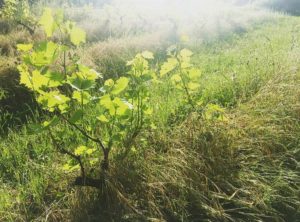
The grapevine: planted for teaching purposes, this grapevine presents about 50 grapes varieties relating to ancient or modern practices about vine in Provence.
Permanent exhibitions: Salagon, the whole story,,,
Tells you the story of the 2000 years of the priory of Salagon.
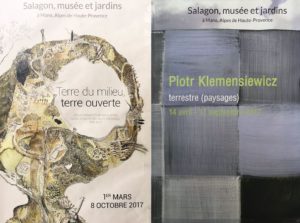
Temporary exhibitions: Terre du milieu, terre ouverte ( The middle-land, an open-land), 1st March- 8th October
Haute-Provence has been since the Middle Ages a passage between Italy and France. Even though the region was once emptied of its population, it now attracts new waves of inhabitants in a quest for a different life style.
Terrestre ( Terrestrial- landscapes): art works by Piotr Klemensiewicz, 14th April- 17th September
Le prieuré 04300 Mane
Phone : +33 (0)4 92 75 70 50
February/March/April 10am-6pm
May>September 10am-7pm
October/15 December 10am-6pm
Festival “Oh les beaux jours!”- Marseille2017/5/10
Festival “Oh les beaux jours!”- Marseille
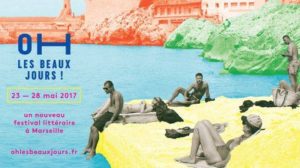
Oh les beaux jours! is a new litterary festival in Marseille. A festival to discover books and literature in a different way, intertwining conferences, concerts, discussions, workshops, readings with music, shows.
Marseille, the 2nd French city was missing a major literature festival. Oh les beaux jours stands for a lively literature, open to the world, with an approach taking multiple forms, in dialogue with disciplines such as hip-hop, sciences, drawing, football.
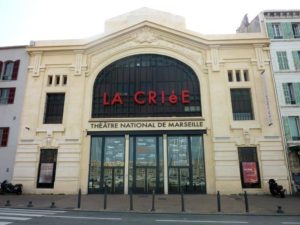
More than 100 artists and authors are participating to this first edition and 60 events and artistic proposals are held in numerous cultural spaces through the city: La Criée, the Mucem museum, Friche de la Belle de Mai, Villa Méditerranée, Alcazar library, and on the Old Port banks.
It represents not only 6 days of events (23rd-28th of May) but actions through the year evolving schools, universities, libraries, cafés converging all these curiosities and energies.
An exceptional programming showcasing renowned authors such as Maylis de Kerangal, Russel Banks, Kamel Daoud, Joseph Boyden, Daniel Pennac.
Organized by the association « Des livres comme des idées », initiative of two women, Nadia Champesme, owner of the bookshop “Histoire de l’Œil” and Fabienne Pavia, founder of “Bec en l’air” publisher.
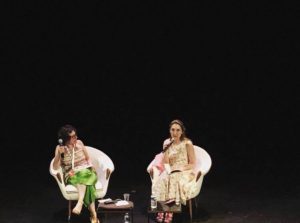
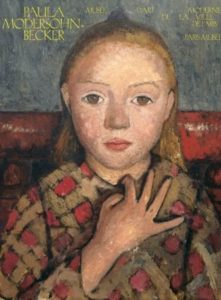
Friday 26th of May: Marie Darrieussecq at La Criée theater, presenting the biography of the painter Paula M.Becker “Etre ici est-une splendeur”,P.O.L, 2016.
Marie Darrieussecq is a French writer born in Bayonne in 1969. Her first novel, Pig Tales, was published in 1996 and subsequently translated into thirty-five languages. She has written some fifteen books for adults, including novels, short fiction, a play, and nonfiction works. In 2013 she was awarded both the Prix Médicis and the Prix des Prix for her novel Men. Being Here, her biography of Paula Modersohn-Becker, was released in 2017.
Cuve- Urban winery, Marseille2017/5/7
Cuve- Urban winery, Marseille
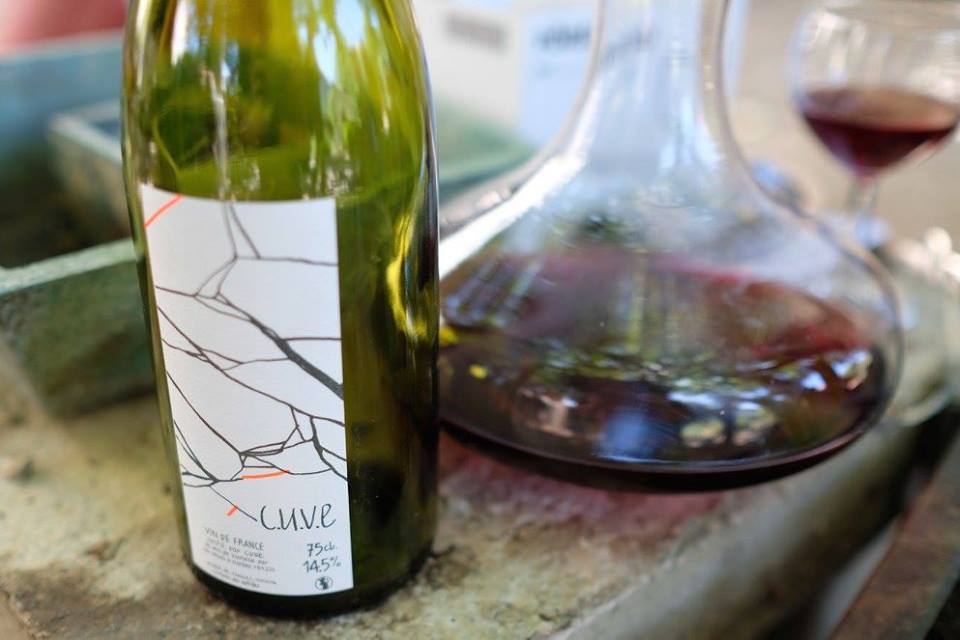
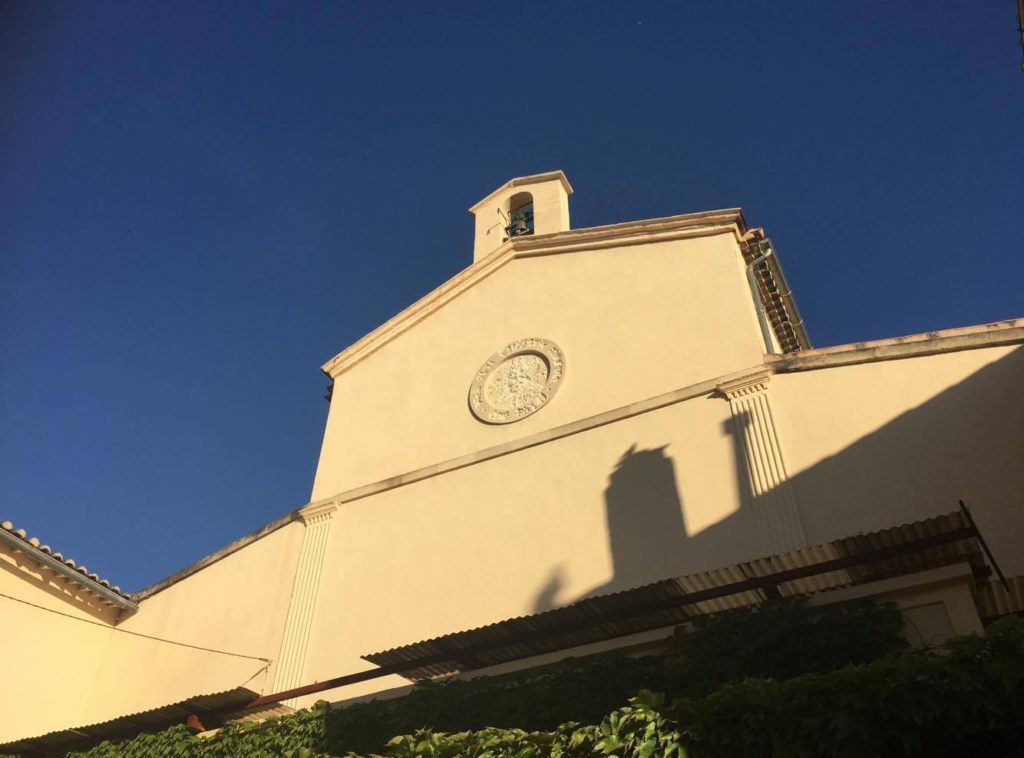
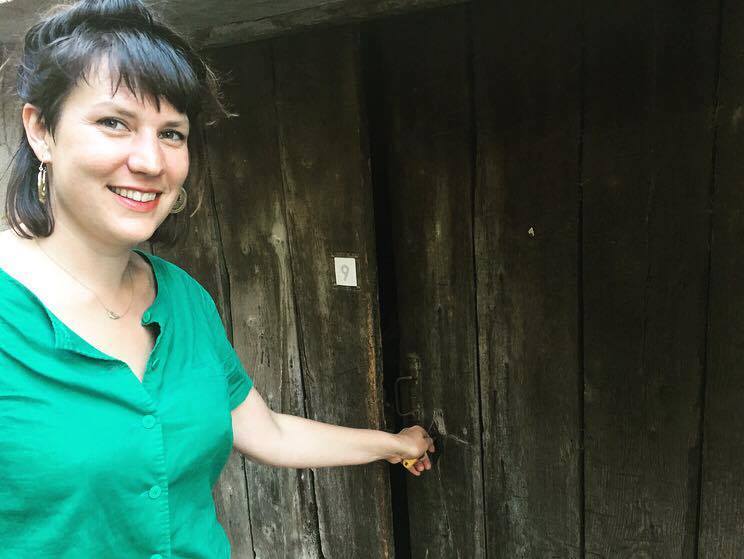
CUVE is a lively and urban wine-making project in Marseille.
Their eight members:
Matthieu Lhotelier, winemaker in Loire, “les champs jumeaux”
Simon (photographer, actor)
Guillaume (photographer),
Prune (architect)
Sarah (sailor)
Lico (videographer)
Tifène (illustrator- graphic-designer)
Mag (webmaster )
share all a simple philosophy: to make natural wine, to make wine to learn to do, to make wine to drink and make people drink, to make wine to learn a process, a collective project and that’s all!
The grapes grow and the CUVE project is under construction on all sides.
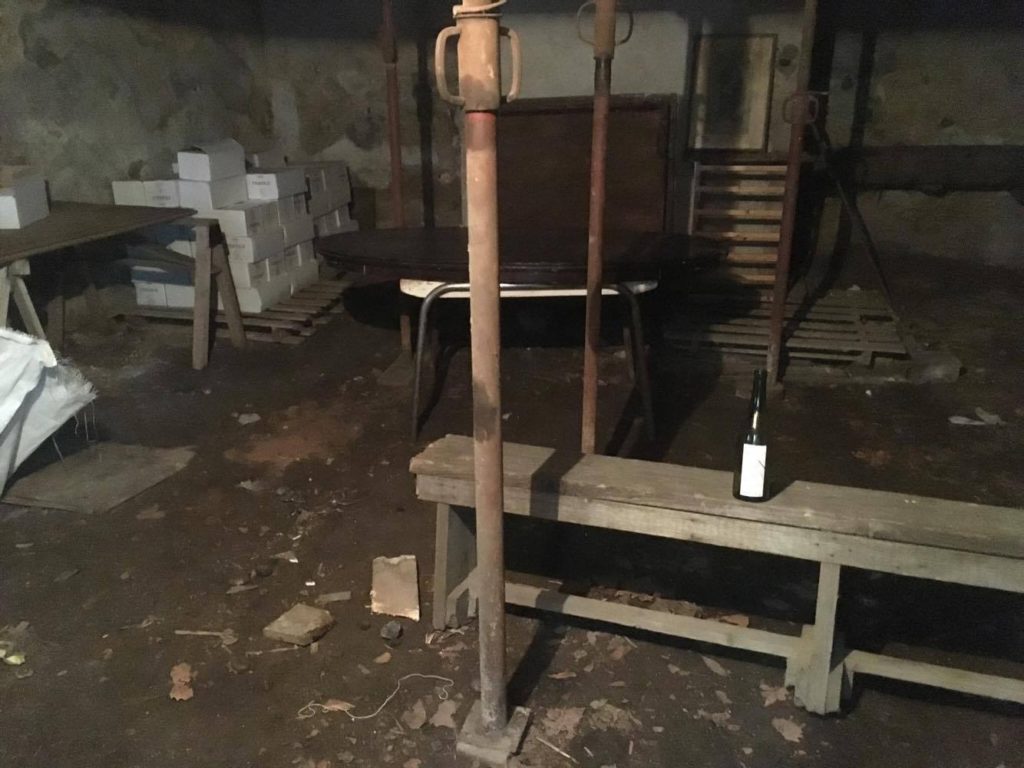
Red wine is made from three different grapes: Caladoc, Syrah, Grenache from the vineyards of the Maoù Estate (vin CUVE was vinified for the first year at the Maoù estate and will be for the year 2017 in their recently installed their cellar in the former Convent of the Victims of the Sacred Heart of Jesus – recently bought by the city of Marseille and located 52 Levat street in the Belle de Mai district ).
Message from the team:
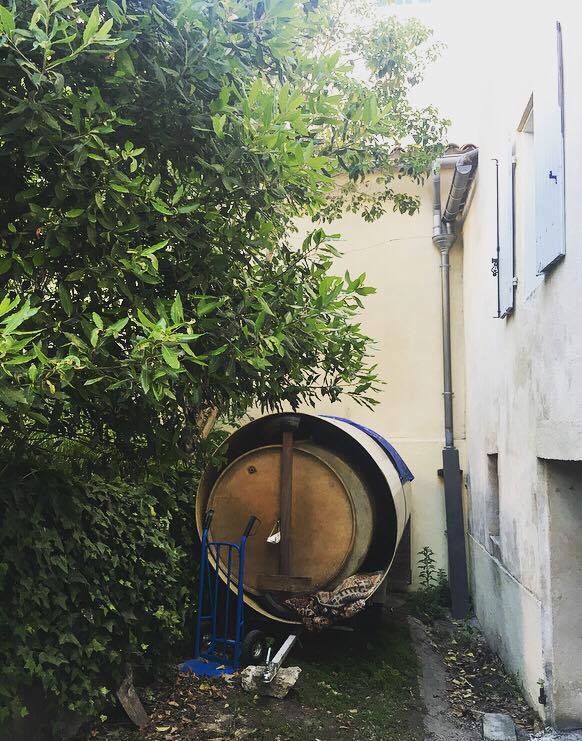
“We want to flow Marseille with natural wine. Allow anyone who wants a healthy drunkenness at an affordable price. In a collective logic, each seed of our cooperative will bring its grapes to the vat to ferment a quality product, without chemicals, and accessible for all. To bring energy to the nights of the city.
From the doors of the city, we will bring back a few tons of good grapes to lose the reason. We will go together, from the Canebiere, to harvest one hectare under the heat of Domaine des Maoù managed by Vincent and Aurélie. Beautiful fruits of Grenache raised in the foothills of Mont Ventoux for the frenetic streets of Marseille. We will launch urban fermentations in the shadow of its houses, factories and offices. These vats will work in secret among the noise of the yards, and we will relay to watch the magic of this urban oenology. This work will be closely followed by the nose and tasting talents of Mathieu L’Hotelier, winemaker at the Champs Jumeaux between Nantes and Angers.
This exhilarating journey will be punctuated by collective and open events to share this ethical adventure with the inhabitants of Marseille and others. So many opportunities to meet you and share with you the questions, successes and setbacks of this city cooperative.”
After Nath Cornec’s initiative with Pour (1 bis rue Farjon, 13001 Marseille), it is a second local act to give the wine its joy!
Cuve- 52, rue Levat 13001 Marseille
https://www.facebook.com/C-U-V-E-1082887661749265/…