







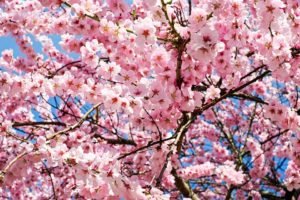
aVin next wine tasting and concert, March 17th at Studio QUE. Let’s celebrate the beginning of the spring with a glass of white or rosé in music!2018/2/20
New sparkling wines from Die, Clairettes & Crémants!
〜フランスと日本〜
南アルプスの風と薫りを楽しむ
From which land flies the sound of the flute?
Carried by the spring breeze this evening
Under the leaves and flowers.
The birds listen to a conversation.
A refreshing glass of wine.
(Li Po)
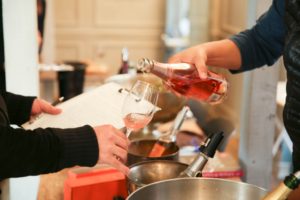
From 1pm to 6pm: wine tasting.
Entrance: 2000 yens ( including a coupon of 2000 yens deductible on any bottle bought on the day, at the tasting).
Wine line up:
George Vernay(ジョルジュ ヴェルネ)
le Clos du Caillou(クロデュカイユ)
Vieille Julienne(ヴィエイユ ジュリアン)
Daumen(ドーメン)
Jaillance(ジャイアンス)
Chateau Vannieres(シャトーヴァニエール)
Funky Chateau(ファンキーシャトー)
From 6pm: Accoustic concert Nao IIzuka, flute and Hisao Fukushima, guitar.
Concert fee: on donation basis.

Edgar Degas exhibition in Paris at the Musée d’Orsay until February 25th: a rare occasion to enjoy his striking paintings on women and alcohol.2018/2/15
Beyond his famous ballerinas’ paintings, this exhibition is the occasion to discover several of his paintings revealing the toughness of life at the time.
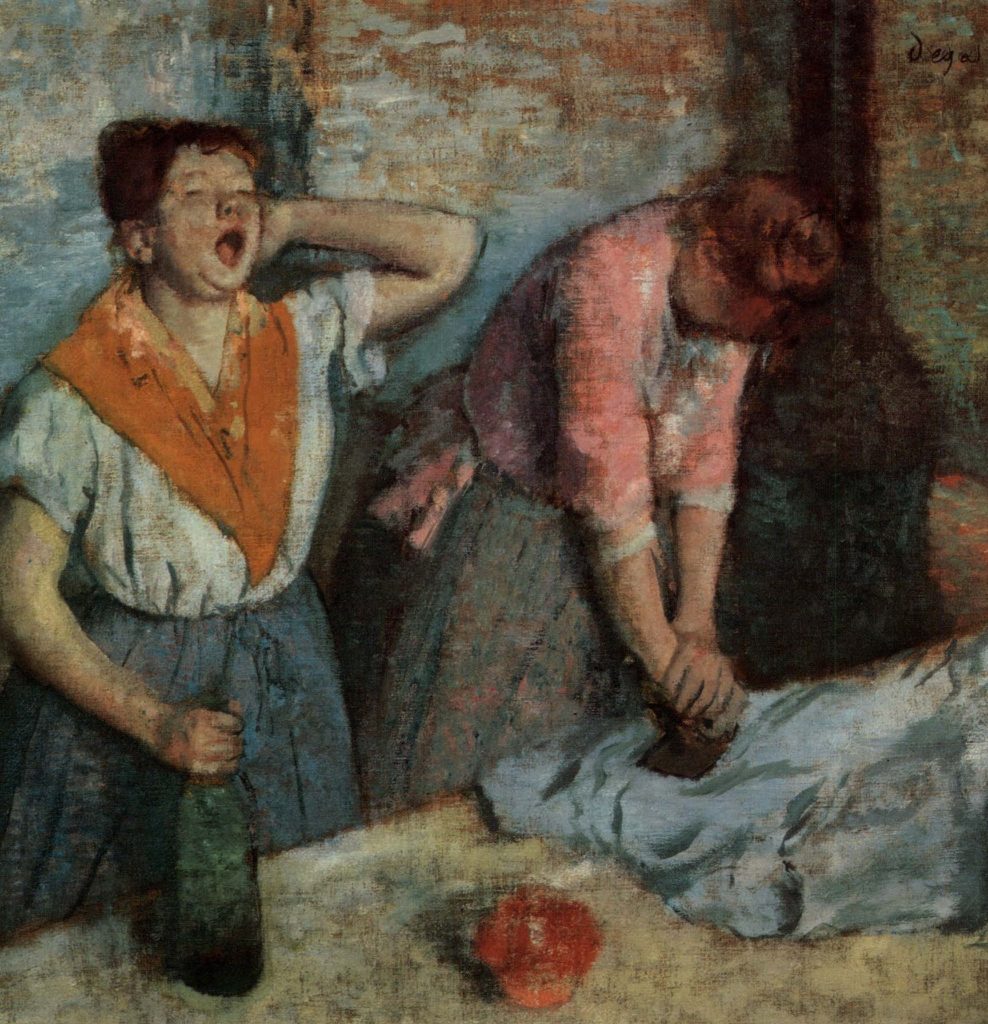
For the 100th anniversary of Edgar Degas death( born Hilaire Germain Edgar de Gas), French painter, sculptor, printmaker and photographer, the Orsay Museum pays him a tribute until February 25th with an exceptionnal exhibition combining sketches, charcoal, pastels & red chalks drawings.
The work is presented along with Paul Valéry text “Degas, Danse, Dessin” who was a closed friend of the artist.
The friendship between Degas and Valéry lasting more than twenty years resulted in an essay published by Editions Vollard in 1937, Degas Danse Dessin. Both intimate and universal, it conveys a poetic, fragmentary image of the painter’s personality and his art, and a kind of meditation on the creative process.
If Degas is well known by a large public for his pictorial representations of young ballerinas, confined interiors or his bronze sculptures, others types of work gained mondial recognition and notoriety.
Among them, those depicting women and alcohol, which have earned the esteem of many historians.
The vast majority of women living in the 19th century in Paris were from very poor backgrounds and were finding comfort in cafés, popular dancing halls of the capital.
There, they could drink without fear of judgement, absinthe and wine. A free attitude magnified by Degas in his compositions.
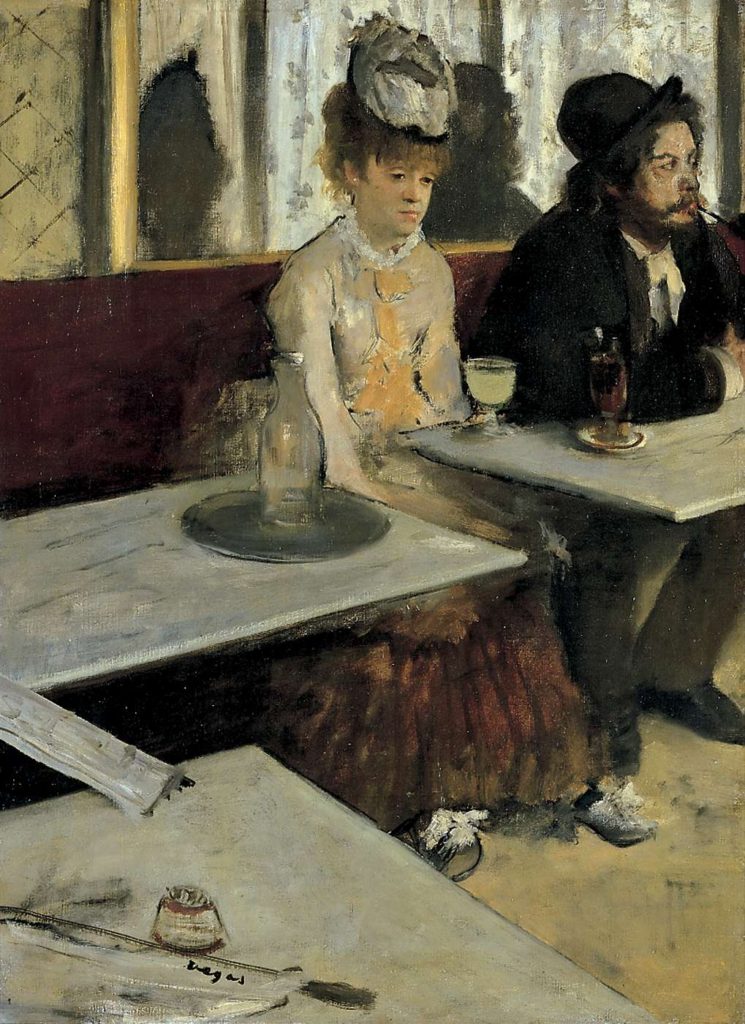
Privileged witness of a fast changing world encompassing strong inegalities and contrasts.
This banker’s son saw Champagne bubbling and endlessly flowing in the National Opera backstage, uper class salons or horse competitions but also captured the despair of an era, and the use of the “green fairy” (refering to absinthe, a liquor made of anise, mint, flowers & leaves extracts) as an anti-depressant and drug for working-class women ( the so-called “grisettes”) loners, milliners and dressmakers.
http://www.musee-orsay.fr/
9h30 to 18h from Tuesday to Sunday
9h30 to 21h45 on Thursday
Closed every Mondays
(source La Revue du Vin de France February 2018)
http://shop.avin.jp/
The galette des rois, a very French tradition!2018/1/26
The galette des rois is a cake traditionally shared at Epiphany, on 6 January. It celebrates the arrival of the Three Wise Men in Bethlehem.
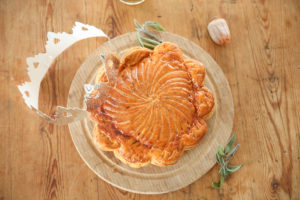
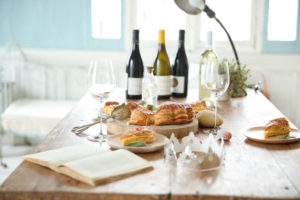
Composed of a puff pastry cake, with a small charm, the fève, hidden inside, it is usually filled with frangipane, a cream made from sweet almonds, butter, eggs and sugar. But more gourmet versions are available for us to enjoy, with chocolate, apple or candied fruits. Every year, the leading French pâtissiers offer exclusive creations for the tradition of crowning the one who finds the fève.
The season of the galette des rois begins on Twelfth Night and ends on Shrove Tuesday but can be celebrated during all month in January.
Celebrated on 6 January, Epiphany corresponds to the moment when the baby Jesus is presented to the Three Wise Men, Melchior, Caspar and Balthazar, who have arrived from the three continents, Asia, Africa and Europe, to give their gifts. Like many Christian festivals, the date of Epiphany corresponds to what was originally a pagan festival. In the past, the Romans celebrated Saturnalia, the festival of the winter solstice, at which a king or queen was chosen for one day, by means of a white or black bean hidden in a cake.
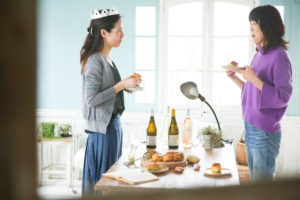
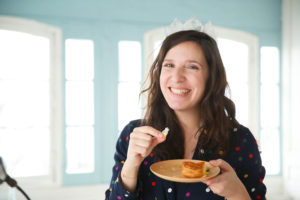
The galette des rois, in its simple version, is a flaky pastry with notches incised across it and browned in the oven. It is usually served with various preparations: frangipane, fruit, chocolate, cream, etc. The one the French like most is filled with frangipane, a cream made from sweet almonds, butter, eggs and sugar. It is said to have been invented by a Florentine nobleman, the Marquis of Frangipani, several centuries ago.
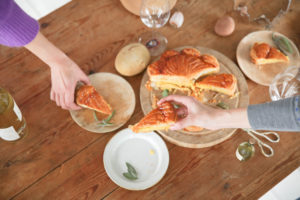
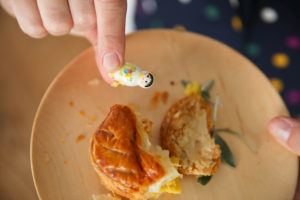
In the past, the pastry would be cut into as many portions as there were guests, plus one. The last one, called the “part du pauvre” or poor man’s share, was for the first poor person who stopped by the house. In the south of France, the traditional dessert is not a puff pastry but a brioche with fruit, also containing a fève, and known as the gâteau des rois. It is made from a sweet brioche dough flavoured with orange flower essence, shaped into a crown, with pieces of red fruit and sugar on top. They even played “find the king” at the table of Louis XIV. The ladies of the court who found the fève became queens of France for a day and could ask the king to grant them a wish called “grâces et gentillesse”. But the Sun King, Louis XIV, was to abolish this custom.
In the 18th century, the fève was a porcelain figurine representing the nativity and characters from the crib. Nowadays there is a wide range of different fèves which are much sought-after by collectors. The family tradition is for everyone to gather together to cut the famous cake. The youngest child goes under the table and points out the guests, who are then given their portion of the cake. A cardboard crown is supplied with the cake. The one who finds the fève is crowned and chooses his or her queen or king.
What to drink with your Galette?
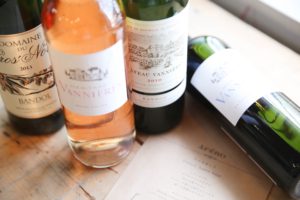
Champagne and Crémant de die(semi-dry and sweet), Clairette de Die (semi-dry) Jaillance. Or a dry white as Château Vannières Bandol or Côtes-du-Rhône Domaine de la Vieille Julienne or Clos du Caillou.
Bandol reds: the “Provence’s kings”2017/12/16
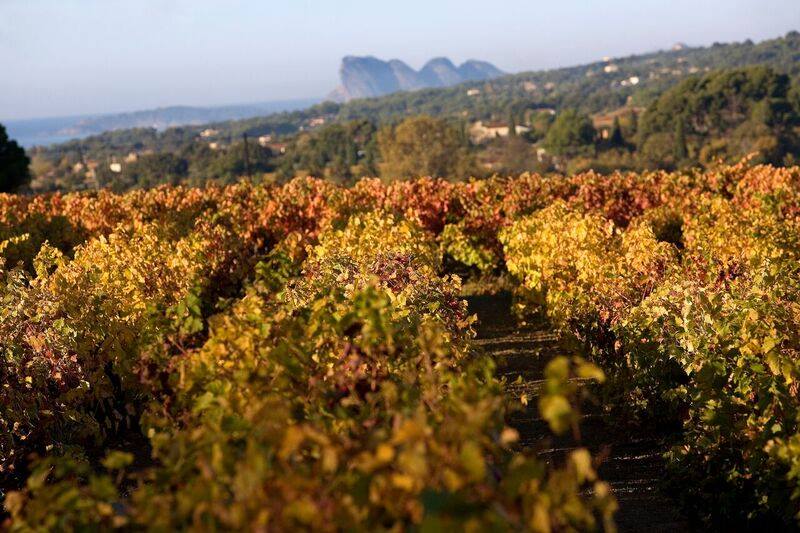
In Provence red wines are considered as “Grand cru”. Few reasons to this: Mourvedres’s dominance; the exceptional nature of the soil, although very varied; the ages of vines, old in average. And finally the ageing style of the Bandol AOC: wines are aged in casks and demi-muids for a minimum of 18 months. Mandatory condition for these wines considered rough in their first years.
The main grape variety of the blends Mourvedre (60% to 95%) signs the best wines.
Four main wine-making styles:
Once put on the side the cuvées with animal aromas, many wines stand out by their perfect expression of the Mourvedre grape.Bandols wines of Château Pradeaux, Jean-Pierre Gaussen, Lafran-Veyrolles or La Bastide Blanche show a muscular profile, and a certain nobleness.
In their first years the best vintages stand out by their virility and youthfulness. Then express their spicy complexity between 5 to 15 years.
Domaine Tempier and La Tour du Bon encapsulate the finess and subtle character of Mourvedre’s grapes, coming from a warm terroir and producing tasty and hearthy wines.
Due to a more modern ageing style (the proportion of new wood being more important) the wines of Gros’Noré, La Bégude, or La Suffrène domains are more rounded in their youths.
Finally, thanks to fresher terroirs, reds wines from Terrebrune and Château Sainte-Anne offera pure, nuanced and very deep expression of the cepage when it gets older.
For some estates who renewed their casks and barrels since a decade, many red wines are still characterized by their ageing process for the recent vintages.
However, some domains such as Sainte-Anne, La Bastide Blanche, Terrebrune or Château Vannières, keep their bottled wines for a few years so that they can relax before marketing.
Certain winemakers advocate for the possibility to a shorter or longer maturing time and try other types of containers such as concrete or amphora-type. As seen at La Tour du Bon estate. Opening up new perspectives on wine making practices in Bandol.
(source: rvf magazine)

Provence wines, differences of soils, climates and landscapes2017/12/5
![provence-wine-region[1]](http://avin.jp/wp-content/uploads/2017/12/provence-wine-region1.jpg)
This historic region sits along the Mediterranean coast of France, bordered by the Rhone River to the west and the Côte d’Azur on the east. Physically, it’s only about 150 miles long and 100 miles north to south but its impact is profound. Wine has been made here for over 2600 years, making Provence the oldest wine producing region of France. It is also the only place to focus on Rosé and is home to the only research institute dedicated to the style.
Provence is blessed with a fantastic climate, especially for grapes! The region gets lots of sunshine and not too much rain with warm days and cool evenings. The Mediterranean moderates the temperatures and the famous “Mistral” wind keeps the vineyards dry, free of pests and the skies clear.
Tons of Sun: Vines need a minimum of 1400 hours of sunshine (degree days) to produce ripe fruit. Provence averages 2700-3000 hours per year.
The geography is diverse with numerous mountain ranges that texture the landscape providing gentle slopes (vines love hills!) and sheltered valleys. The soils are diverse as well. Limestone rules in the western part of Provence where the land was once covered by a warm, shallow ancient sea. Travel east and the soil is mostly chrystalline schist (granite) and, in one small area, volcanic.
Throughout Provence, wild, resinous shrubs like rosemary, juniper, thyme and lavender grow almost everywhere. Many say these plants, collectively called “Garrigue” (on limestone/clay) or ‘Maquis” (when growing on crystalline schist), influence the character of the wines.
![provence-wine-region4[1]](http://avin.jp/wp-content/uploads/2017/12/provence-wine-region41.png)
With all these different soils, climate, altitude and historical influences, it only makes sense that Provence is home to many varieties of grapes. Some of them will be familiar and some not so much as they are found only here:
White Wine Grapes:
White grapes of Provence include:
Rolle (aka Vermentino)
Ugni Blanc (aka Trebbiano)
Bourboulenc
Clairette
Marsanne
Roussanne
Grenache Blanc
Red Wine Grapes:
Most of the traditional red grapes are found elsewhere in France and the Mediterranean; these include:
Grenache Noir
Syrah
Mourvedre
Carignan
Cinsault
Counoise
Tannat
Cabernet Sauvignon
Have you heard of Tibouren, Braquet, Calitour, Folle Noir and Barbaroux? These are some of the more obscure and unique red varieties of Provence.
About 36 wine varieties are allowed in Provence. They originate from France, Spain, Italy, Greece and Hungary.
(source: winefolly)