







Festival “Oh les beaux jours!”- Marseille2017/5/10
Festival “Oh les beaux jours!”- Marseille
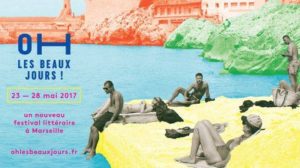
Oh les beaux jours! is a new litterary festival in Marseille. A festival to discover books and literature in a different way, intertwining conferences, concerts, discussions, workshops, readings with music, shows.
Marseille, the 2nd French city was missing a major literature festival. Oh les beaux jours stands for a lively literature, open to the world, with an approach taking multiple forms, in dialogue with disciplines such as hip-hop, sciences, drawing, football.
More than 100 artists and authors are participating to this first edition and 60 events and artistic proposals are held in numerous cultural spaces through the city: La Criée, the Mucem museum, Friche de la Belle de Mai, Villa Méditerranée, Alcazar library, and on the Old Port banks.
It represents not only 6 days of events (23rd-28th of May) but actions through the year evolving schools, universities, libraries, cafés converging all these curiosities and energies.
An exceptional programming showcasing renowned authors such as Maylis de Kerangal, Russel Banks, Kamel Daoud, Joseph Boyden, Daniel Pennac.
Organized by the association « Des livres comme des idées », initiative of two women, Nadia Champesme, owner of the bookshop “Histoire de l’Œil” and Fabienne Pavia, founder of “Bec en l’air” publisher.
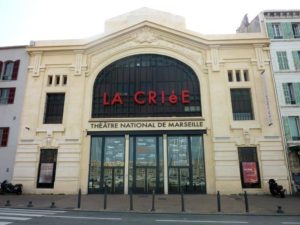
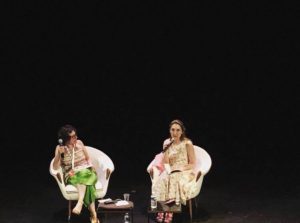
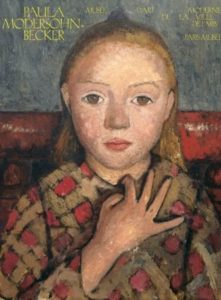
Friday 26th of May: Marie Darrieussecq at La Criée theater, presenting the biography of the painter Paula M.Becker “Etre ici est-une splendeur”,P.O.L, 2016.
Marie Darrieussecq is a French writer born in Bayonne in 1969. Her first novel, Pig Tales, was published in 1996 and subsequently translated into thirty-five languages. She has written some fifteen books for adults, including novels, short fiction, a play, and nonfiction works. In 2013 she was awarded both the Prix Médicis and the Prix des Prix for her novel Men. Being Here, her biography of Paula Modersohn-Becker, was released in 2017.
Cuve- Urban winery, Marseille2017/5/7
Cuve- Urban winery, Marseille
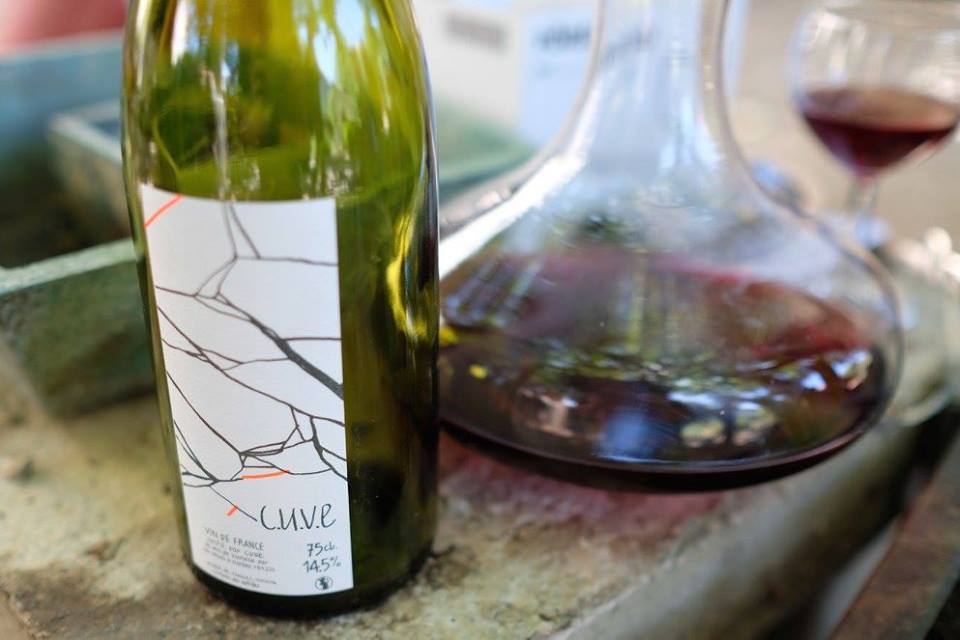
CUVE is a lively and urban wine-making project in Marseille.
Their eight members:
Matthieu Lhotelier, winemaker in Loire, “les champs jumeaux”
Simon (photographer, actor)
Guillaume (photographer),
Prune (architect)
Sarah (sailor)
Lico (videographer)
Tifène (illustrator- graphic-designer)
Mag (webmaster )
share all a simple philosophy: to make natural wine, to make wine to learn to do, to make wine to drink and make people drink, to make wine to learn a process, a collective project and that’s all!
The grapes grow and the CUVE project is under construction on all sides.
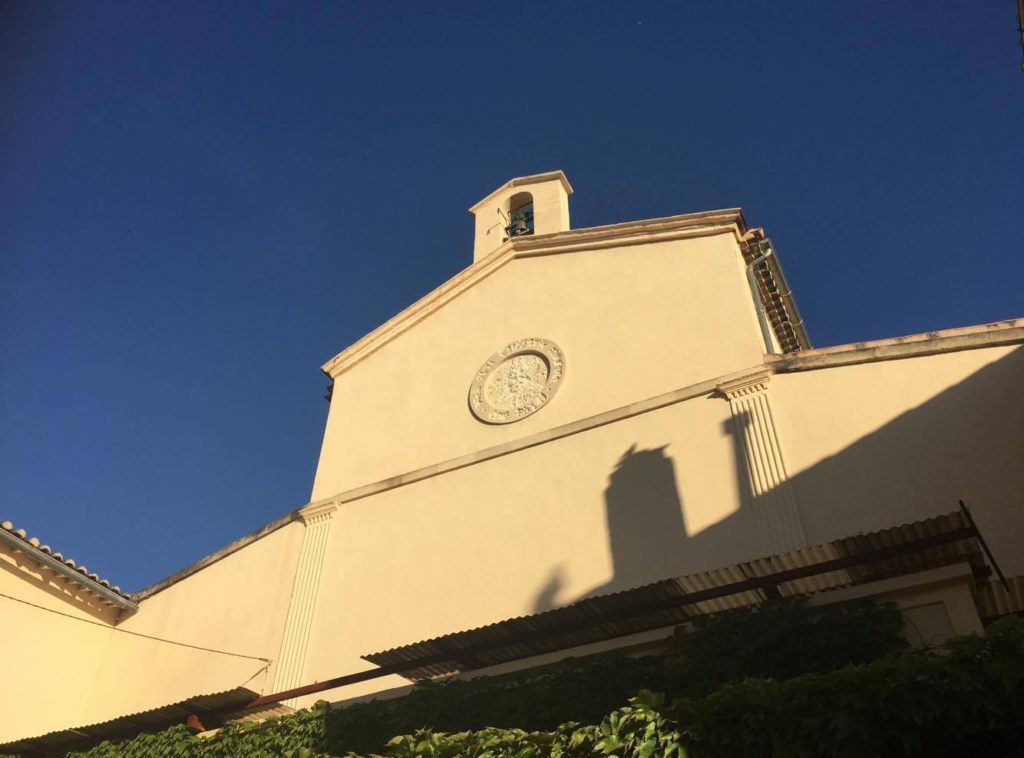
Red wine is made from three different grapes: Caladoc, Syrah, Grenache from the vineyards of the Maoù Estate (vin CUVE was vinified for the first year at the Maoù estate and will be for the year 2017 in their recently installed their cellar in the former Convent of the Victims of the Sacred Heart of Jesus – recently bought by the city of Marseille and located 52 Levat street in the Belle de Mai district ).
Message from the team:
“We want to flow Marseille with natural wine. Allow anyone who wants a healthy drunkenness at an affordable price. In a collective logic, each seed of our cooperative will bring its grapes to the vat to ferment a quality product, without chemicals, and accessible for all. To bring energy to the nights of the city.
From the doors of the city, we will bring back a few tons of good grapes to lose the reason. We will go together, from the Canebiere, to harvest one hectare under the heat of Domaine des Maoù managed by Vincent and Aurélie. Beautiful fruits of Grenache raised in the foothills of Mont Ventoux for the frenetic streets of Marseille. We will launch urban fermentations in the shadow of its houses, factories and offices. These vats will work in secret among the noise of the yards, and we will relay to watch the magic of this urban oenology. This work will be closely followed by the nose and tasting talents of Mathieu L’Hotelier, winemaker at the Champs Jumeaux between Nantes and Angers.
This exhilarating journey will be punctuated by collective and open events to share this ethical adventure with the inhabitants of Marseille and others. So many opportunities to meet you and share with you the questions, successes and setbacks of this city cooperative.”
After Nath Cornec’s initiative with Pour (1 bis rue Farjon, 13001 Marseille), it is a second local act to give the wine its joy!
Cuve- 52, rue Levat 13001 Marseille
https://www.facebook.com/C-U-V-E-1082887661749265/…
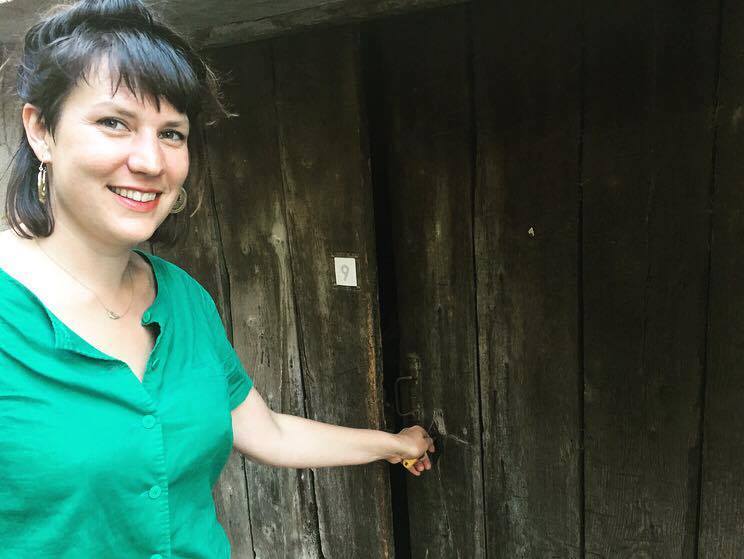
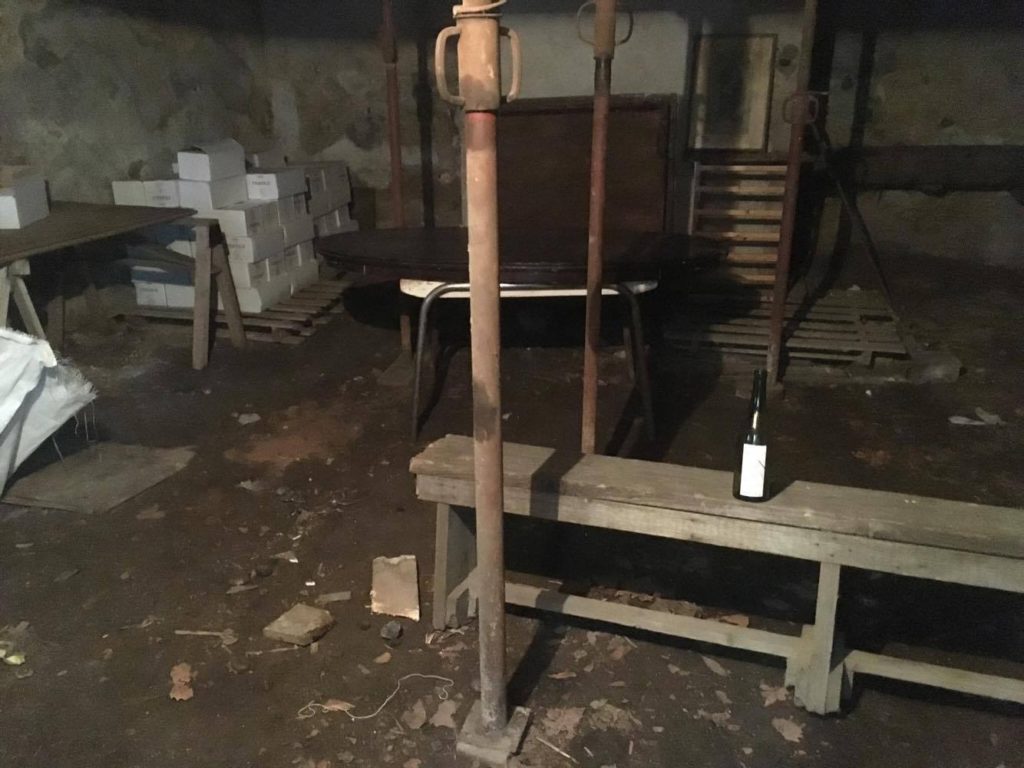
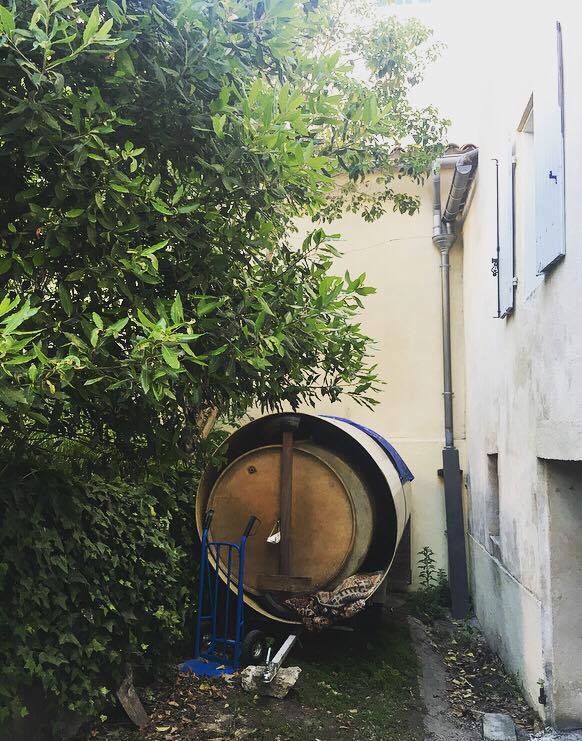
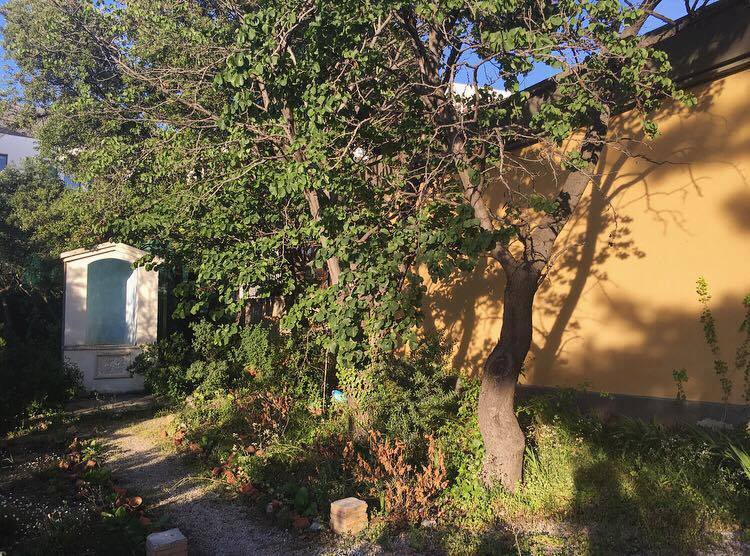
Photo-med festival at the Villa Meditérannée- Marseille2017/5/1
Photo-med festival at the Villa Meditérannée- Marseille
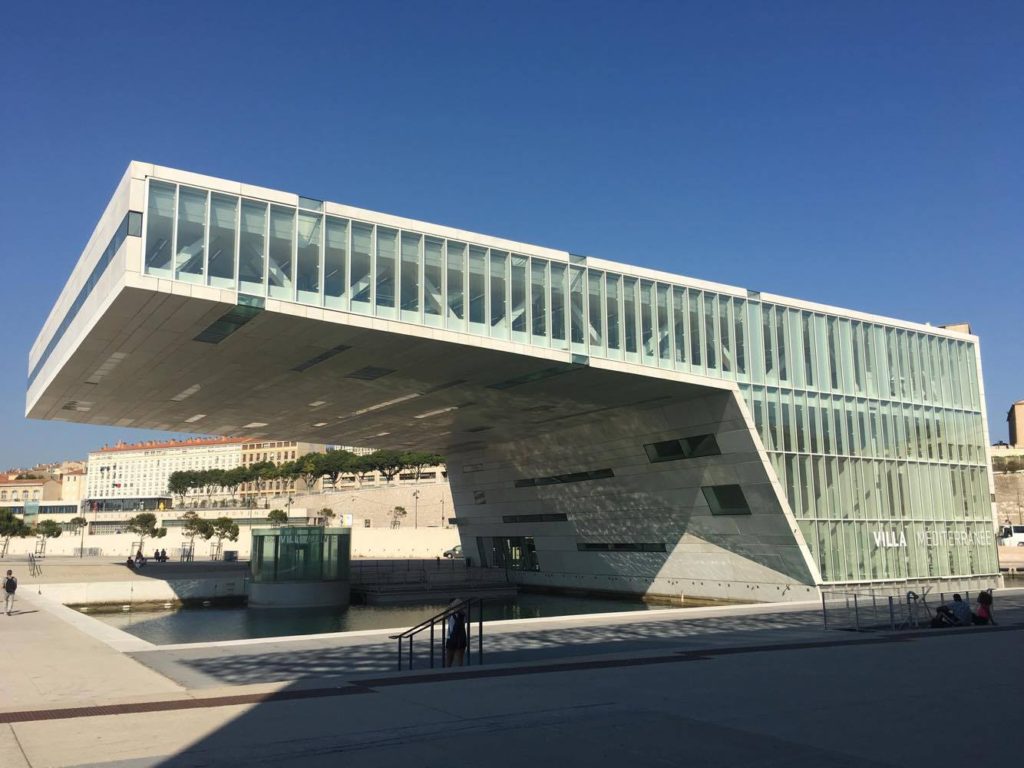
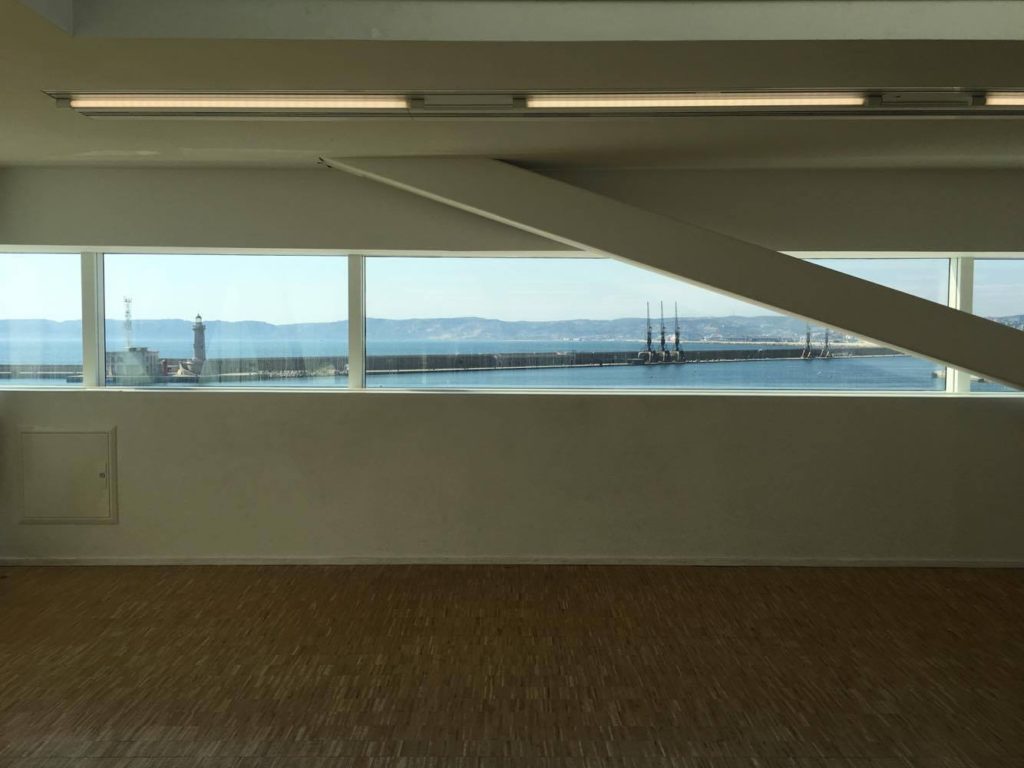
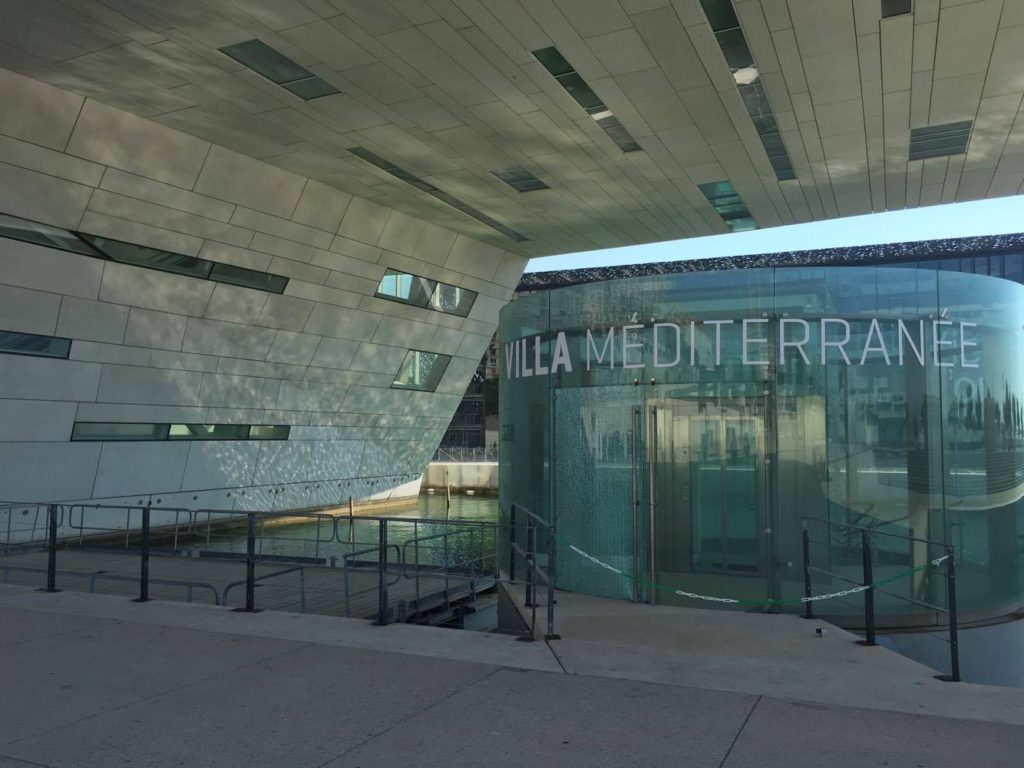
The Mediterranean Villa, an architecture between sky and sea.
An audacious architecture, designed by Stefano Boeri, a committed actor of the Italian political and cultural scene, professor of urbanism, influenced bya humanist tradition that makes him particularly sensitive to the transformations taking place in the Mediterranean world.
The building of the Villa Méditerranée was the subject of a competition won in 2004, by the architect Stefano Boeri. Work began in 2010.
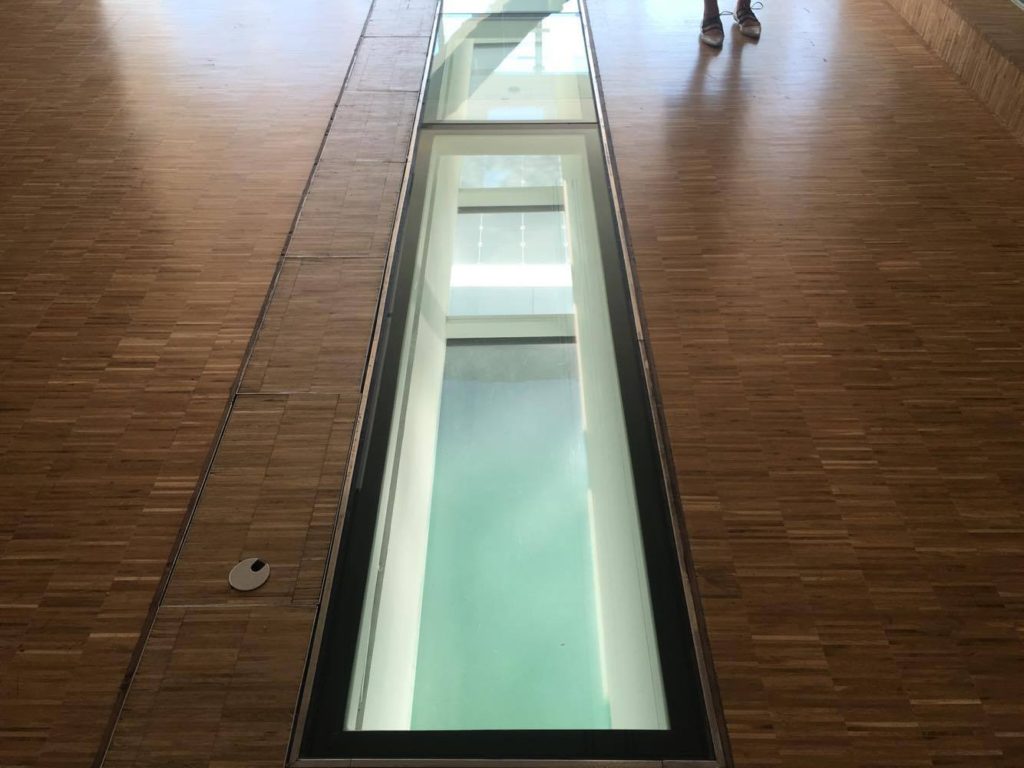
Stefano Boeri has designed an unusual building that develops its spaces on and under the sea and is distinguished by a spectacular 40-meter overhang over a 2,000 m2 artificial pond. True technical prowess, unique in Europe by its capacity to welcome the public. The upper level, whose roof is 19 meters above the basin, will host an exhibition tray of 760 m2, connected by a footbridge to a room of 150 m2 and surrounded by a free-access belvedere.
Underneath the 2.25 meter deep basin is the base of the building. In the agora located in this level, an amphitheater allows to host shows, conferences and screenings of films.
Outside, the concrete skin, pierced with openings, was thought as a ribbon running through the whole building, from its back façade to its roof, going through the underside of the cantilever.
Villa Méditerranée has among its missions the follow-up and analysis of the main issues of inter-Mediterranean relations, in particular Mediterranean policies, the impact of conflicts, political and socio-cultural phenomena, first of all, which include religious movements. Bring together the best specialists, researchers, analysts and actors but also public decision-makers in order to contribute to the critical analysis of the needs and actions to be given priority in terms of Mediterranean policy.
Mediterranean Photography Festival-
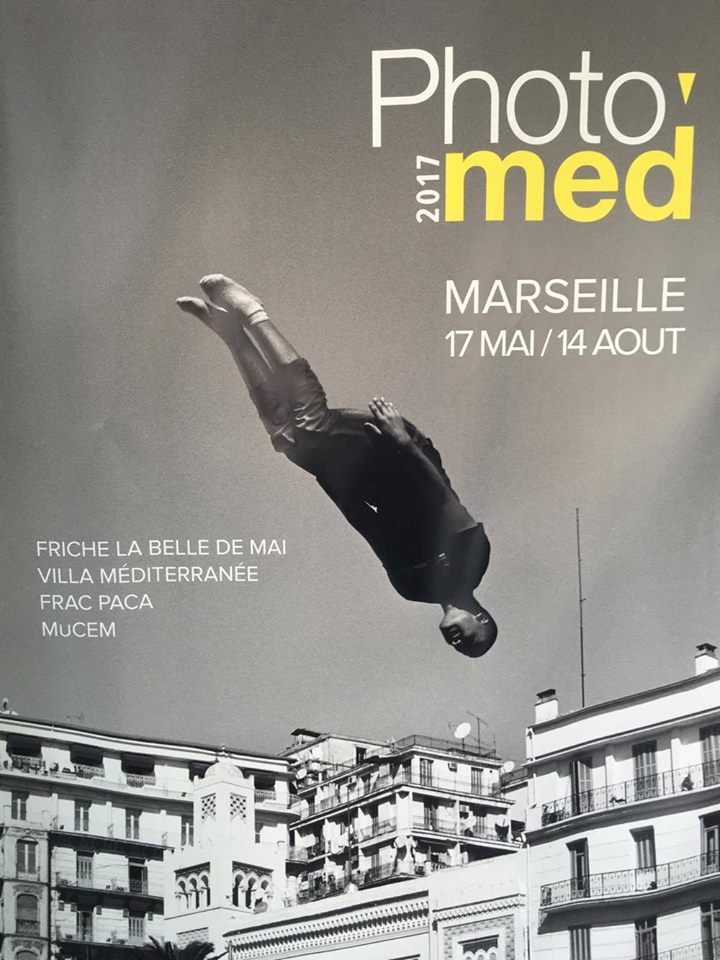
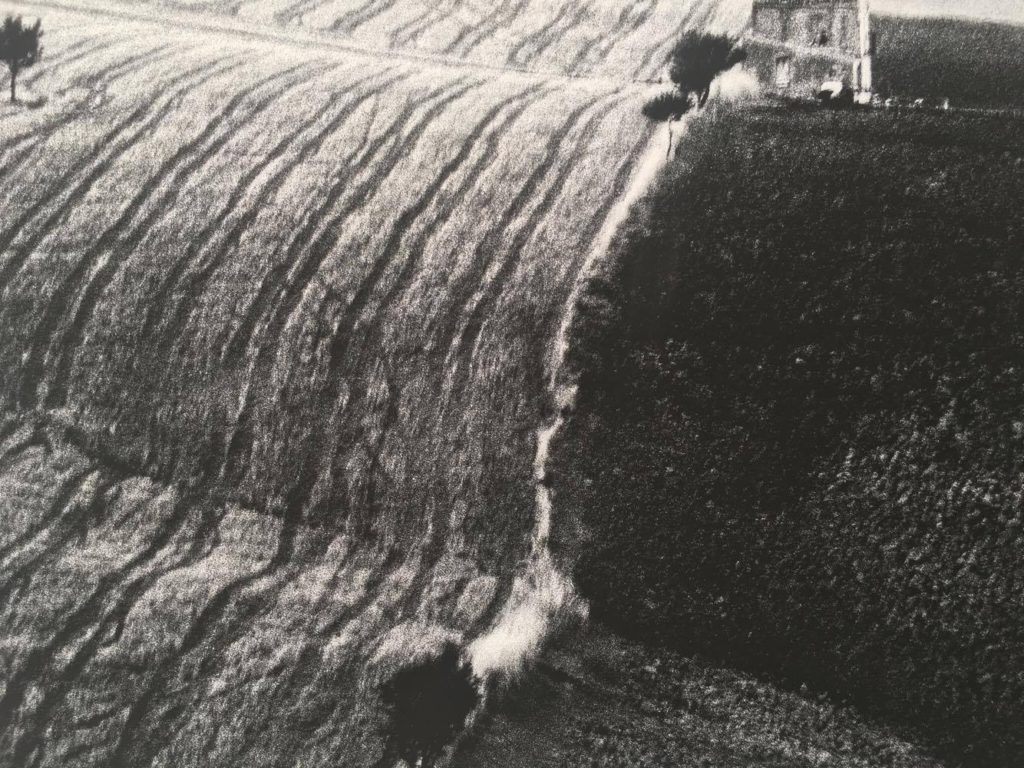
Photomed, founded in 2011 by two professional of the photo world, Philippe Heullant and Philippe Sérénon, presents photographs and videos made by Mediterranean artists on this region of the world to a wide audience. The festival has already experienced five editions which were held in Sanary-sur-Mer. Its original line and the quality of its exhibitions have made it one of the most important photographic manifestations in France. Building on its success in France, Photomed began to expand internationally. A Lebanese edition was thus created in 2014. And three more editions are currently being studied abroad, in Casablanca, Tunis and Barcelona.
In order to reach new audiences and enlarge its audience, while remaining attached to Sanary and Toulon, Photomed wished to be present in Marseille. Also in 2017, for its 7th edition, the festival accentuates its presence in Marseille, where exhibitions are held in several places: Friche La Belle de Mai, FRAC PACA, Mucem, J1, Les Ateliers de l’Image and Mediterranean villa.
The Villa Méditerranée is hosting this festival from 17 May to 13 August 2017 on the theme of the city.
Artists exhibiting:
Franck Déglise Sur la route d’Alger
Sirine Fattouh Images du dessaisissement
Maude Grübel Jardin d’essai
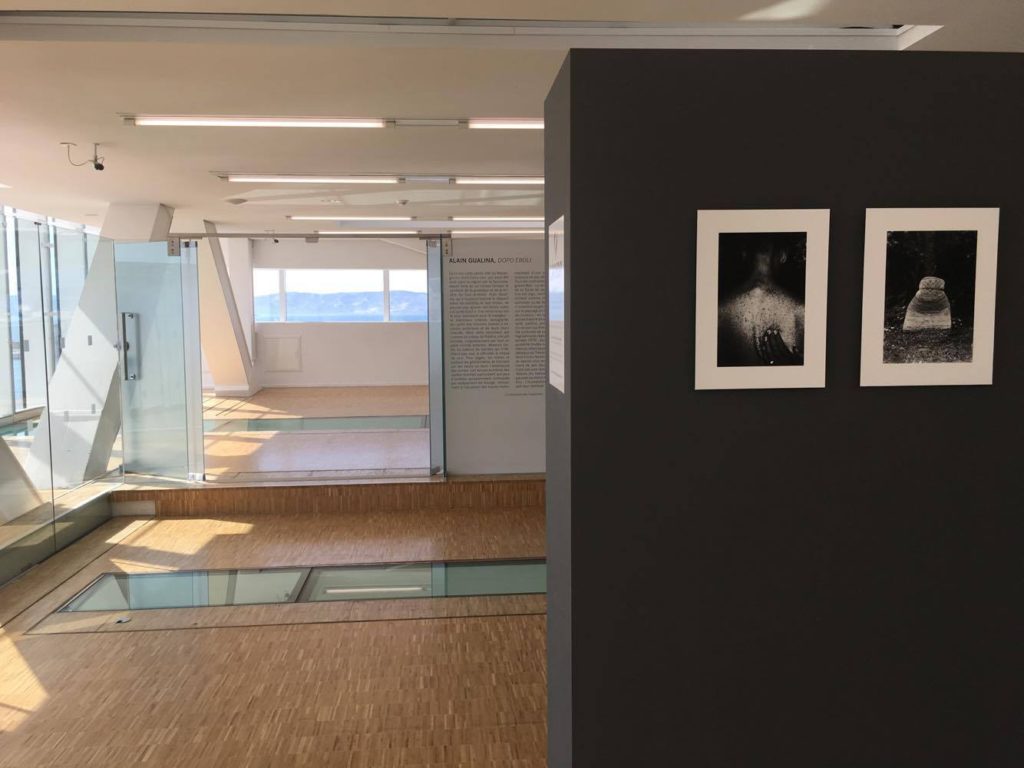
Alain Gualina Dopo Eboli
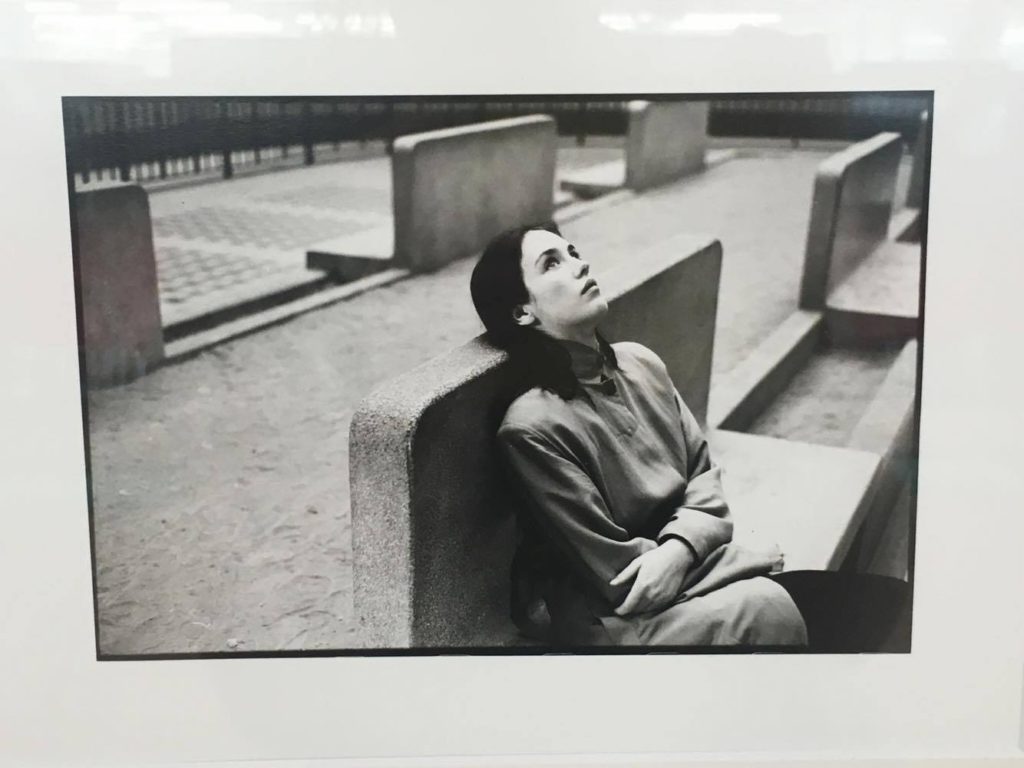
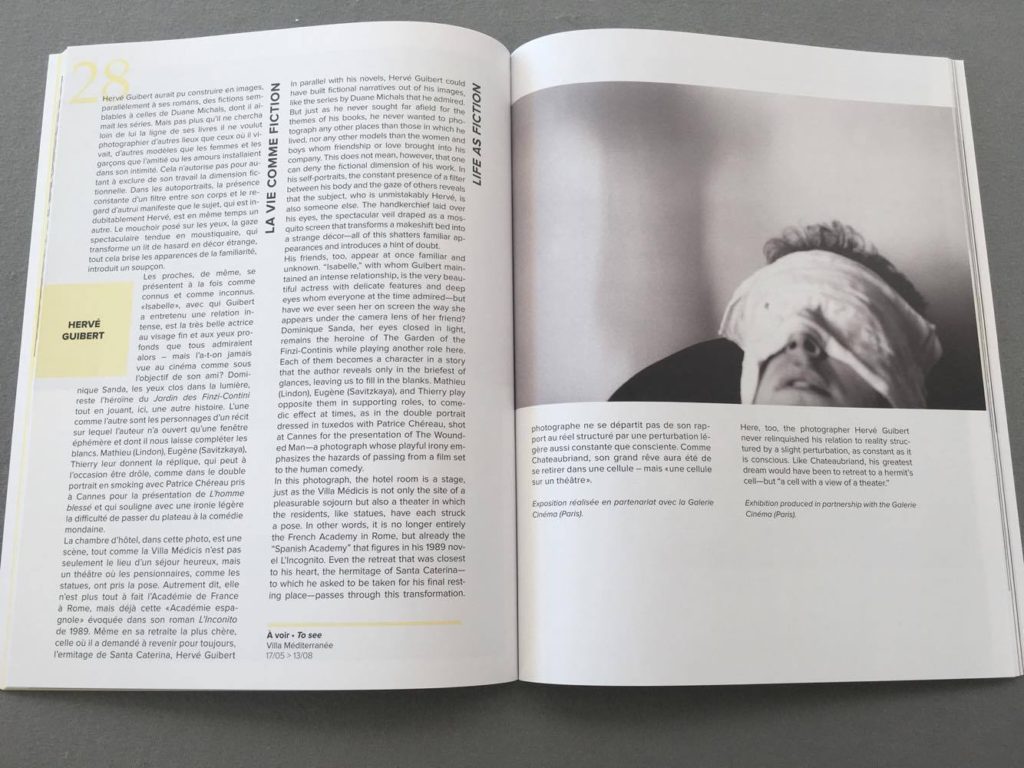
Hervé Guibert La ville comme fiction
Sebla Selin Ok Expérimenter la ville
Mickael Soyez Marseille au fil des jours
Free entry from Monday to Sunday, closed on Monday.
festivalphotomed.com
http://www.villa-mediterranee.org/en/medias
The Vieille Charité and the International center of Poetry- Marseille2017/4/8
The Vieille Charité and the International center of Poetry- Marseille
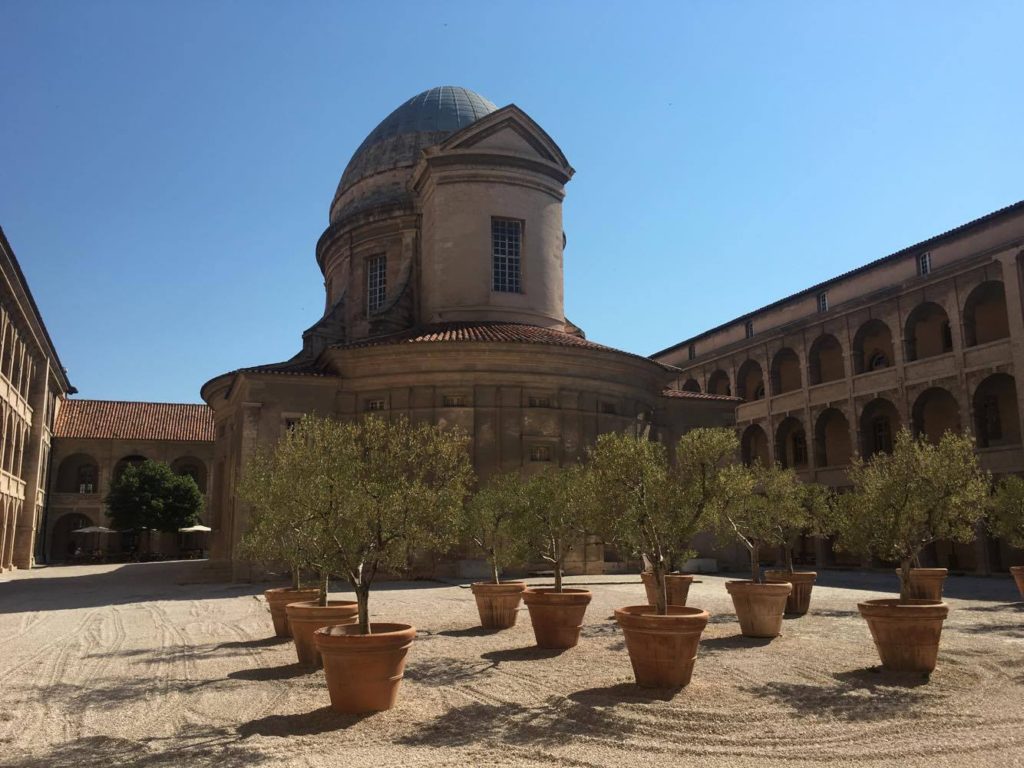
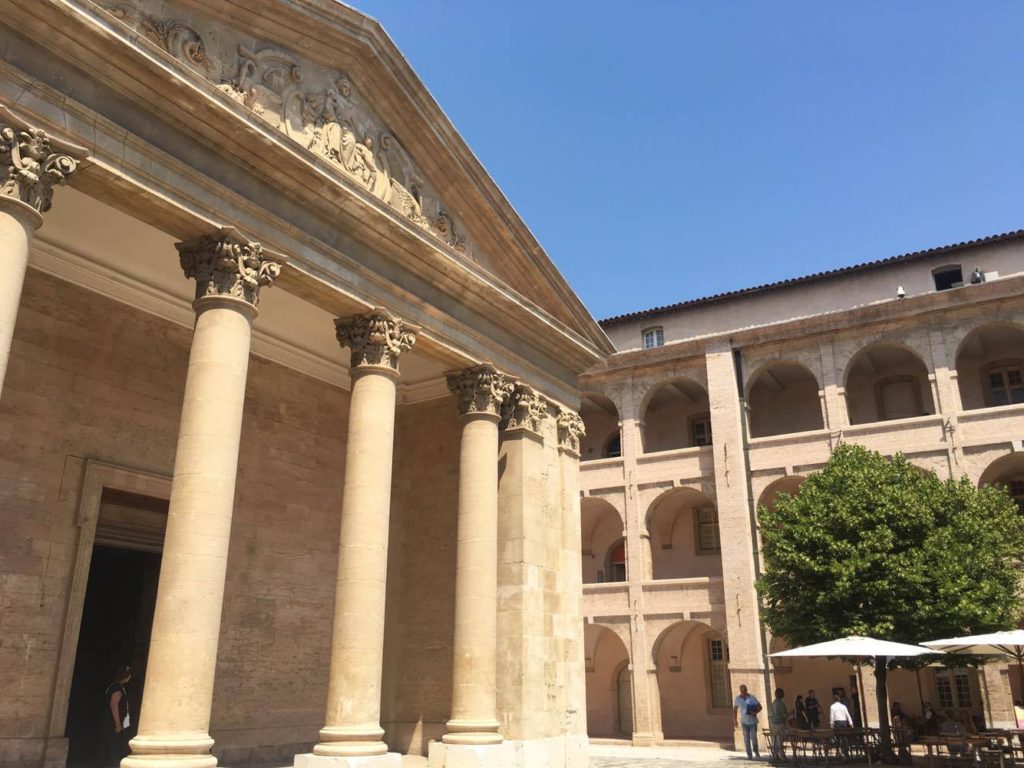
In accordance with the royal policy of “the great confinement of the poor”, in 1640 the City Council decided to “confine Marseille’s native poor to a clean and specific place.” In 1670, a charity within the Magistrate Council commissioned Pierre Puget, the Marseille-born king’s architect, to build a General Hospital to accommodate beggars and the poor. The first stone was laid in 1671 of what would be one of Pierre Puget’s most beautiful architectural designs.
The hospital was completed in 1749 with four wings of buildings enclosed on the outside and opened by a 3 floor corridor on an internal rectangular courtyard to access the vast communal work and residential spaces separating men and women. The chapel built in the centre of the courtyard between 1679 and 1707 is a stunning architectural piece with an ovoid dome, the epitome of Italian baroque. The current façade wasn’t built until 1863 and echoes the Charité’s mission.
After the Revolution, the Charité became a hospice for the elderly and children until the end of the 19th century. In 1905, the building was occupied by the army and was then used to shelter the most destitute. Abandoned after the Second World War and destined to be demolished, the architect Le Corbusier persevered until it was listed as a Monument Historique in 1951. The renovated Vieille Charité has been a science and culture centre since 1986. It houses the Musée d’Archéologie Méditerranéenne, the Musée des Arts Africains, Océaniens, Amérindiens (M.A.A.O.A), the Centre International de la Poésie de Marseille (C.I.P.M), Le Miroir cinema and temporary exhibition halls.
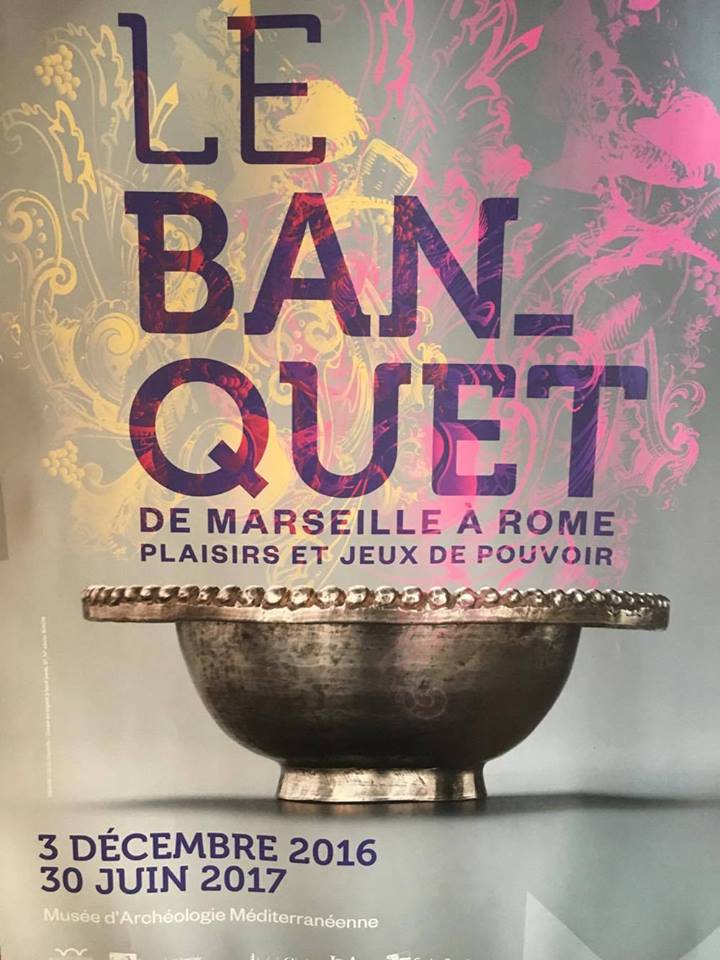
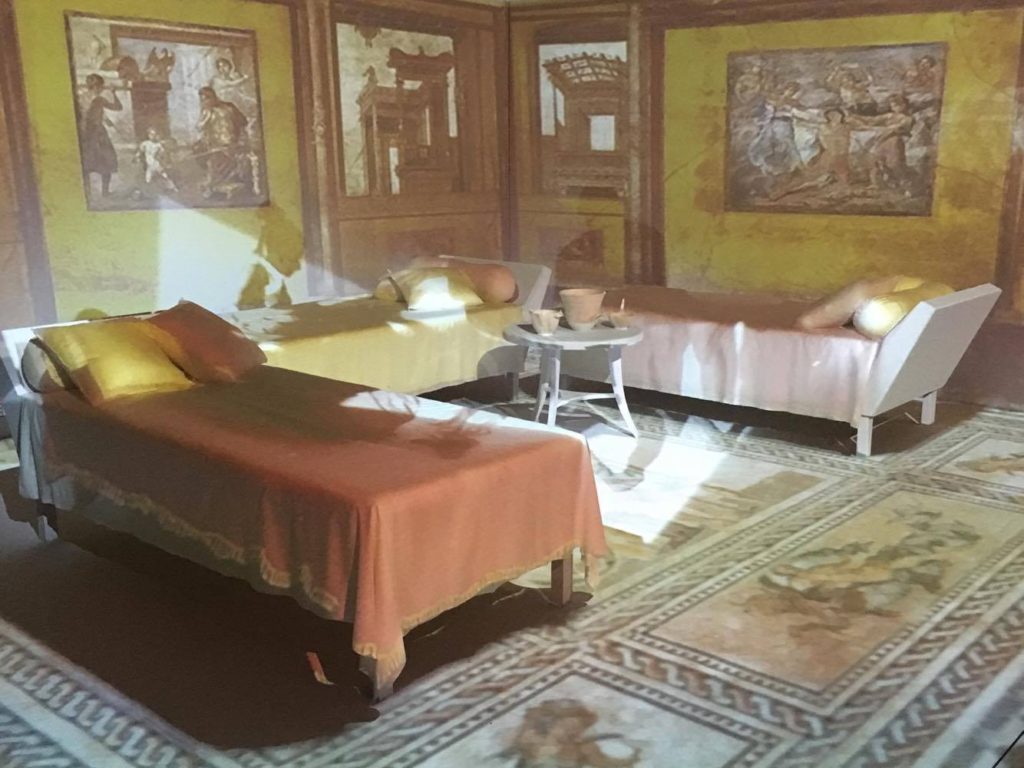
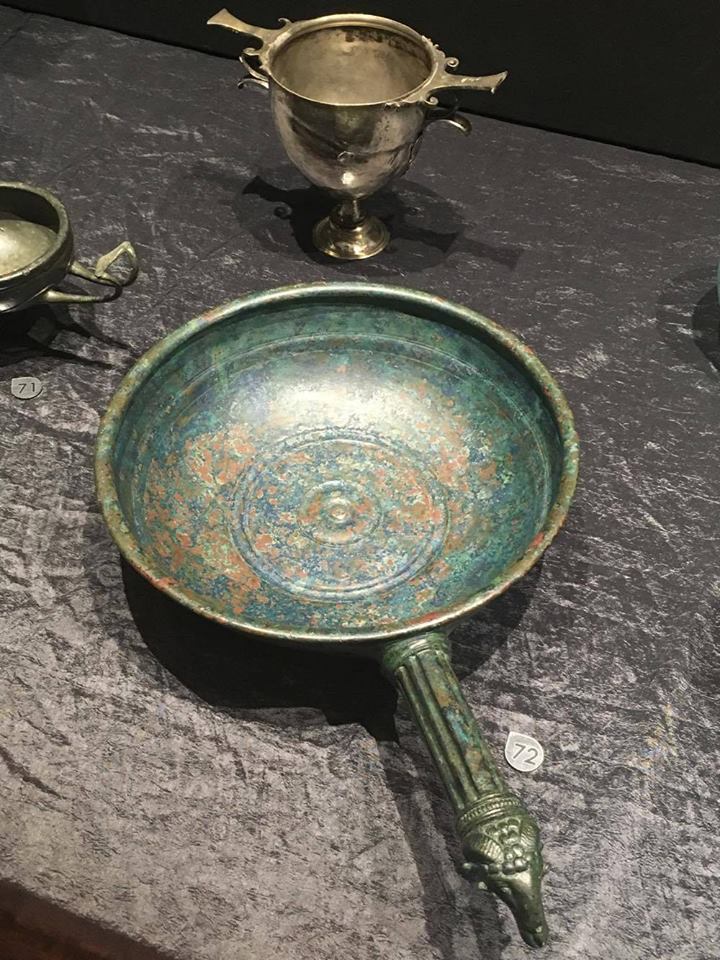
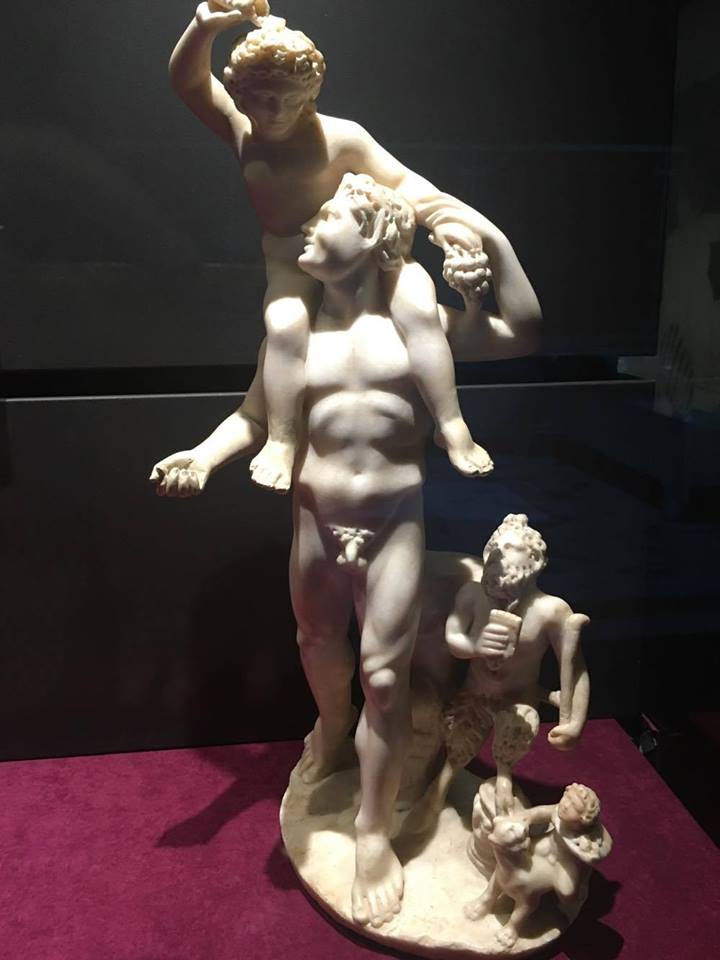
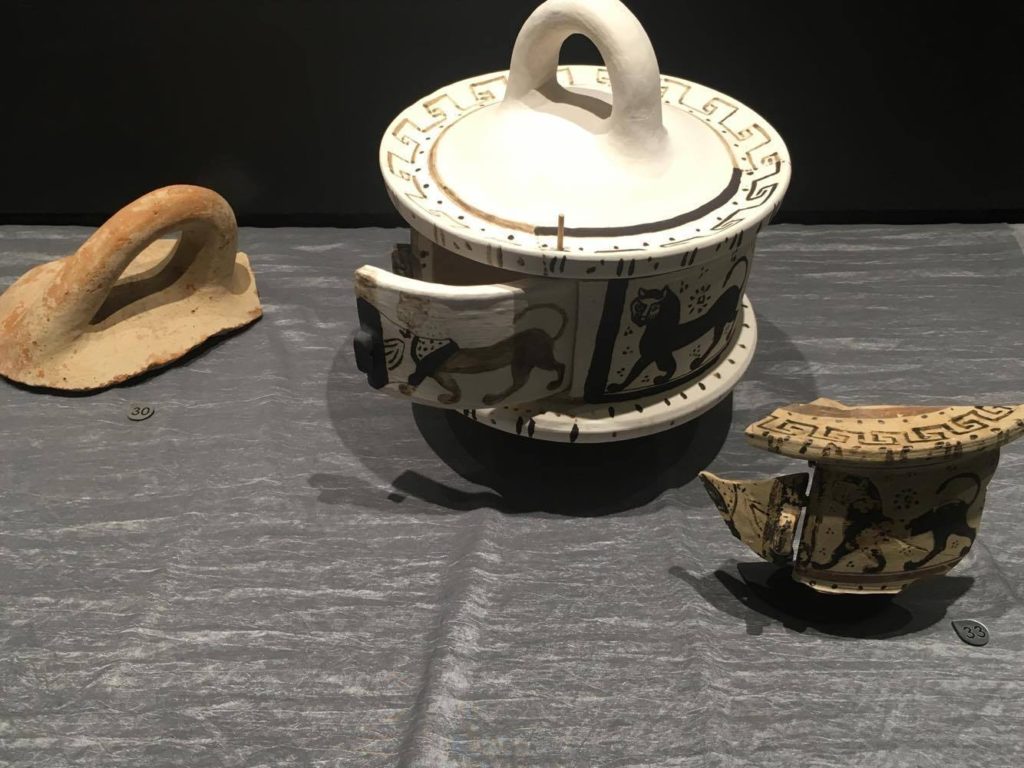
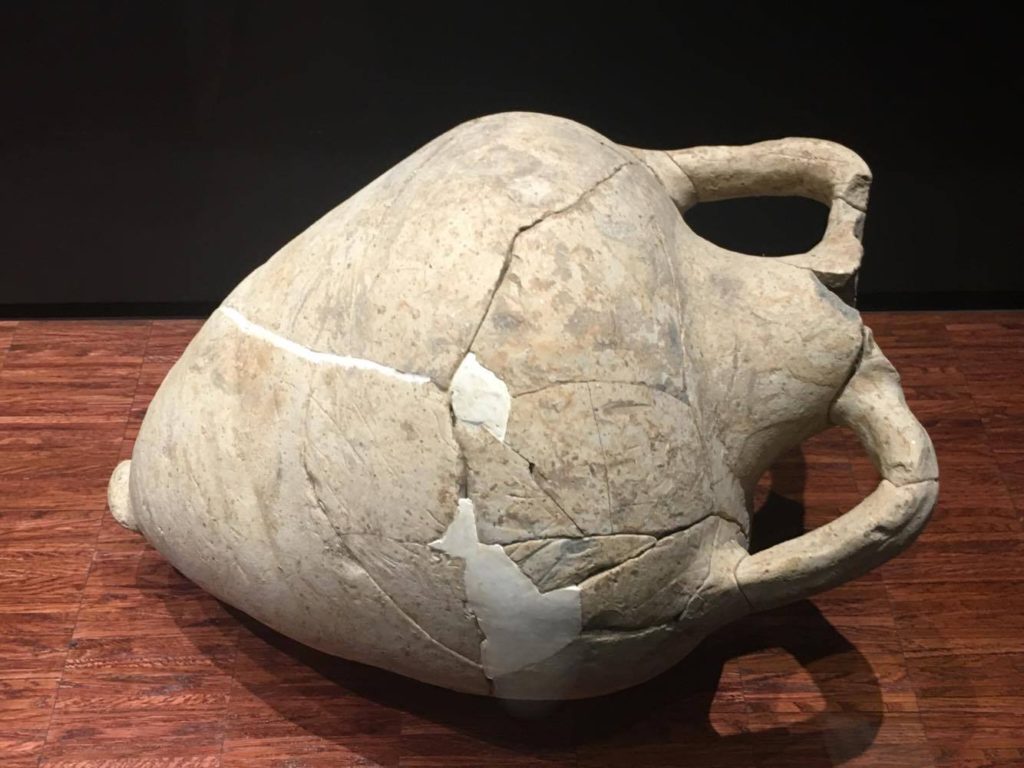
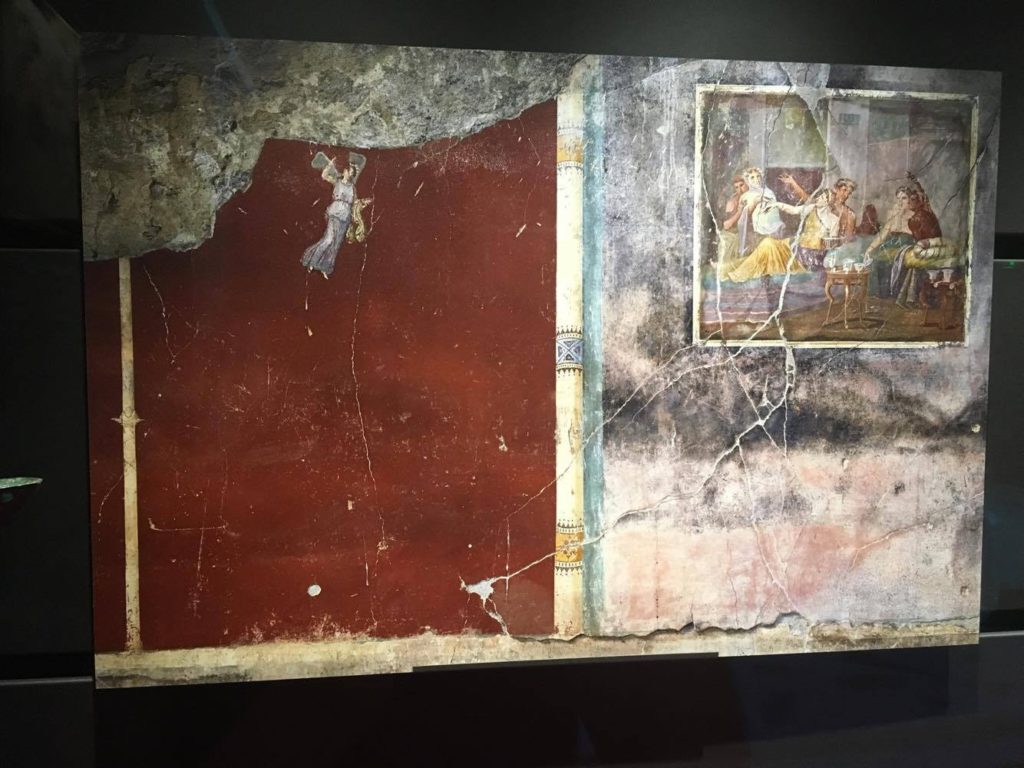
The exhibition “The Banquet of Marseille in Rome: Pleasures and Games of Powers” aims to show the importance of the symposium and to reconstitute the course of an antique banquet: food and drink consumed, the role attributed to the ” Bankers “, as well as the activities practiced (from the art of rhetoric to erotic games).
If Rome has delivered the famous architecture of the rotating banquet hall, Marseilles (Massalia) is indeed not to be outdone, and there are no less than three banquet halls that have been uncovered in the last fifteen Years in the historic center of the city.
By crossing these discoveries, the exhibition is divided into three parts:
– Massalie banquet rooms
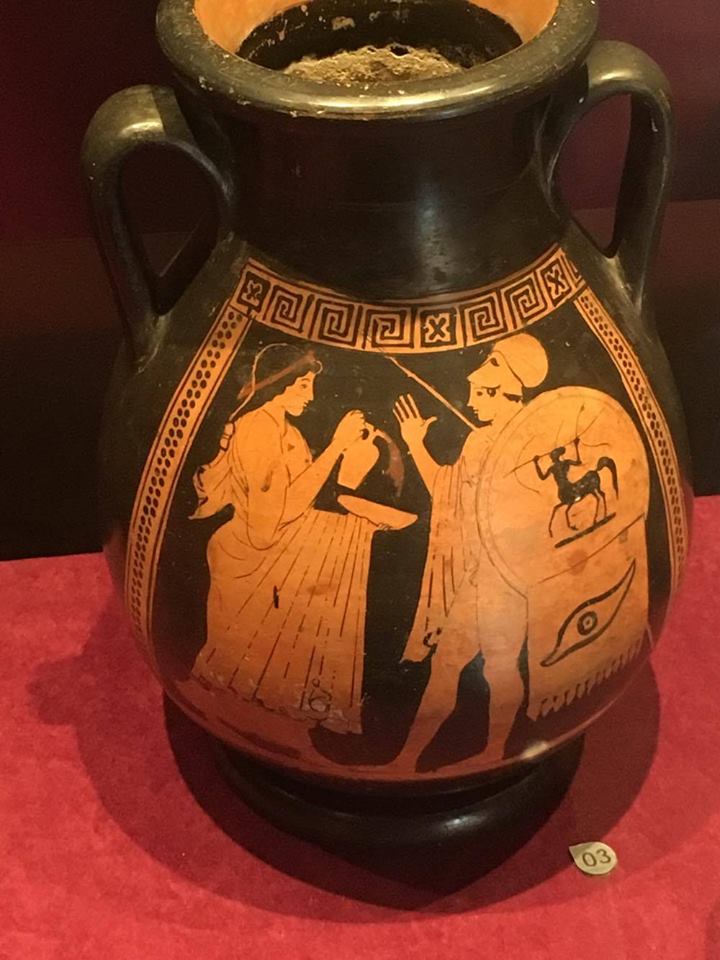
– Banquet tableware
– The Roman banquet and the evocation of the famous machina neronis
The museum’s reserves house a rich and important collection of objects widely exploited in the exhibition and offers the opportunity for the public to appreciate and understand the everyday life of the aristocrats at private banquets, divine banquets with their community obligations, and finally, the imperial Roman banquets in all their excess.
A virtual 3D reconstruction (mapping) evokes the unfolding of an antique banquet. Sounds, music, games and discussions brings to life this educational restitution.
To learn more about the roman Banquet conf. Katarine Raff work “The Roman Banquet”
http://www.metmuseum.org/toah/hd/banq/hd_banq.htm
http://vieille-charite-marseille.com/
Open from Tuesday to Sunday from 10 am to 6 pm,
Closed on Mondays except Easter and Whitsunday, on 1 January, 1 May, 1 November, 25 and 26 December.
Cantini Museum- Marseille2017/3/20
Cantini Museum- Marseille
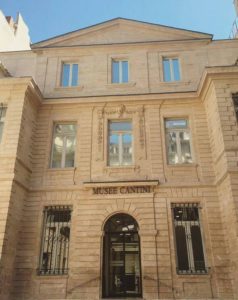
In the heart of Marseille center this excellent art museum conceals some surprising – and impressive – finds behind its wrought-iron gates. The core collection contains some fantastic examples of 17th- and 18th-century Provençal art, including André Derain’s Pinède, Cassis (1907) and Raoul Dufy’s Paysage de l’Estaque (1908). A second section is dedicated to depictions of Marseille, with works by Max Ernst, Joan Miró, André Masson and others.
The “hôtel particulier”, built in 1694 by the Compagnie du Cap Nègre, was bought in 1709 by the family of Montgrand, which kept it until 1801. It later became known to several owners, who remained for more than half a century the seat Of the “Circle of the Phocaeans” installed in 1836, before being acquired by Jules Cantini, important marble maker who took part in the construction of numerous civil and religious buildings in Marseilles during the Second Empire. A great art lover, Jules Cantini donated it to the city in 1916, to become a museum devoted to the art of our time.
This prestigious cultural institution in Marseille is devoted to the “modern” period of the twentieth century, which extends between 1900 and the 1960s.
The procurement policy, accompanied by important government deposits (National Museum of Modern Art, Fonds National d’Art Contemporain, Picasso National Museum, Musée d’Orsay) and supported by numerous donations, The creation of one of the finest French public collections devoted to the 20th century.
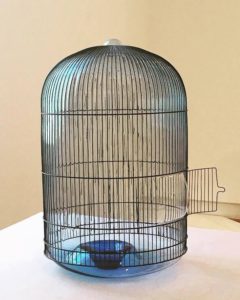
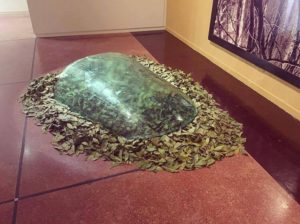
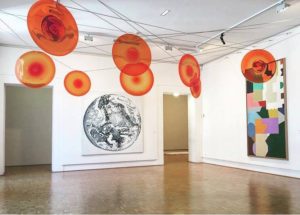
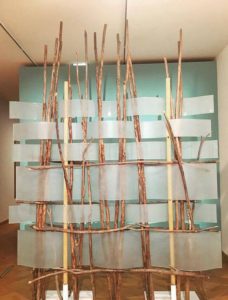
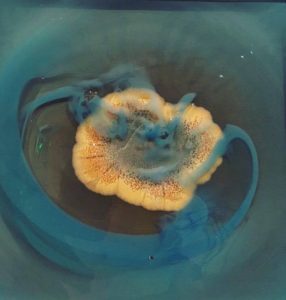
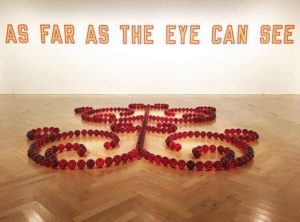
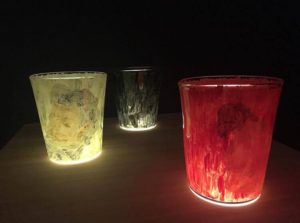
It also held temporary exhibitions through the year. On show from 17 March to 24 September 2017: “A House of Glass”, The Cirva, The International Glass and Visual Arts.
Since its establishment in 1986 the Cirva, a contemporary art centre specialising in glasswork, has welcomed artists, designers and architects wishing to experiment with glass for innovative projects. The Cirva provides a devoted, inquiring and audacious team of professional glassblowers with a wealth of practical experience and expertise to support and turn the intentions of the invited artists into reality.
The Cirva has been built up over the years, mainly focusing on the artists. Theer are meetings, conversations, time spent reflecting and researching, amidst the concentration and warmth of the workshop in Rue de la Joliette. Energy flows through this house of glass, concentrating on continual movements and researching new techniques. Creation needs time and this is respected here. The Cirva is half-hidden, yet it also enjoys opening its doors to reveal the treasures of the collection.
The Cantini Museum features 17 artist who have created extraordinary pieces of work at the Cirva. By providing a fluid structure to the layout, each room makes it possible for the works produced in glass to be presented in the broader perspective of both artists who are not expert in ths material, and the artist researchers. The Cirva champions the concept that the essence of a work is not solely confined to technique, and it is therefore clear that pieces from its collection, in most cases three-dimensional sculptures, should be linked to major works from the Cantini Museum and the Mac, together with the Fonds régional d’art contemporain Provence-Alpes-Côte d’Azur (Regional foundation for contemporary art of Provence-Alpes-Côte d’Azur). Each room therefore sheds new light on the work of the artist as well as on the works produced in glass, but also opens the door to unfamiliar encounters, as if trying to see from the other side of the mirror.
Open everyday from 10:00am to 18:00pm
closed on Monday
19 Rue Grignan, 13006 Marseille, France
metro: Estrangin-Préfecture, line 1, 5mns walk.